TR
 7 March 2026

Water is the basic source of life, but the water in your glass may not be as innocent as it seems. Today, our drinking water faces invisible dangers due to industrialisation, agricultural activities and aging infrastructure systems. One of these dangers is heavy metals in water with their insidious accumulation and serious health risks. These toxic elements, which can be colourless and odourless, are also called “invisible killers” because they cannot be detected by our standard senses. In this guide, we will examine in detail what heavy metals are, how they get into water, their effects on your health and most importantly, how you can protect your family from this danger in the light of scientific data and legal standards.
What are heavy metals and how do they get into water?
Heavy metals are metallic elements that generally have a density higher than 5 g/cm³ and can be toxic or poisonous to humans even at low concentrations. They can be found naturally in nature and can also be released as a result of industrial processes brought about by modern life. The most dangerous feature of these metals is the process called “Bioaccumulation”. Our body cannot break down these substances or excrete them quickly enough; therefore, metals accumulate in tissues and organs over time, leading to chronic poisoning.
Natural Resources and Industrial Wastes
There are two main ways in which heavy metals reach water resources. The first is natural erosion in the earth’s crust. As groundwater passes through layers of soil, it dissolves minerals and metals in rocks and incorporates them. For example, this is why groundwater in some regions is naturally high in arsenic.
The second and more common cause is human activities. Mining activities, metal plating plants, paint industry, uncontrolled use of pesticides and battery wastes cause heavy metals to leach into the soil and from there into water resources. Studies on the Ergene and Seyhan rivers in Turkey are striking examples of how industrial wastes increase the heavy metal load in water basins. This pollution threatens not only the rivers but also the agricultural lands and groundwater resources that are fed from the basin.
Mains Water and Plumbing Source Pollution
Many consumers ask the question “Is my municipal water clean?”. In Turkey, municipalities supply water from treatment plants to the network in accordance with TS 266 standards. However, the real danger usually starts on the journey after the water leaves the plant. This is called “secondary pollution”.
If the plumbing in your building or neighbourhood is old, the materials used in the pipes (old lead pipes, copper fittings or poor quality fittings) can corrode and release heavy metals into the water. The “Flint, Michigan” water crisis, which made a great impact on the world, is the most painful example of the dissolution of lead in the pipes as a result of the change in the chemical structure of the water and mixing into drinking water. Similarly, the water flowing from the tap in your home may not be of the same quality as the water coming out of the treatment plant.
Common Harmful Heavy Metals in Drinking Water
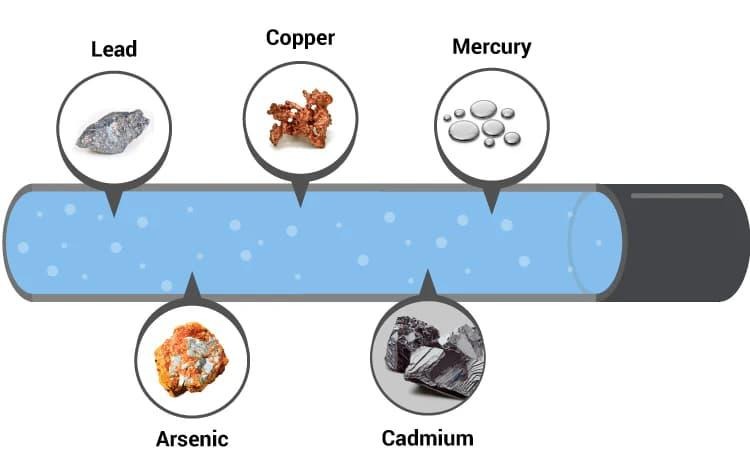
Not all heavy metals pose the same risk to human health. While some metals such as zinc or iron are essential for the body in low amounts, metals such as lead, mercury, arsenic and cadmium have no biological benefit and are directly toxic. Here are the most common and most dangerous ones in drinking water:
Arsenic (As)
Arsenic can enter water through both natural geological formations and industrial wastes. It is tasteless and odourless, making it difficult to detect. The World Health Organisation (WHO) lists arsenic among the 10 most dangerous chemicals. The risk of arsenic is higher in areas where groundwater is intensively used.
Lead (Pb)
The main source of lead pollution is usually old water installations. Lead pipes or solder containing lead corrode over time and enter the water. Lead is a metal that should be “zero tolerance” for babies and children, especially as it attacks the developing nervous system. It replaces calcium in the body, accumulates in the bones and can remain there for years.
Mercury (Hg)
Mercury enters water through rainfall into water catchments, usually as airborne waste from the chimneys of thermal power plants, or through industrial discharges. In water, it is converted by bacteria into a more toxic form, “methyl mercury”. This form easily enters the food chain and can accumulate in fish and reach our table.
Cadmium (Cd)
Batteries, fertilisers and plastic production waste are the main sources of cadmium. Cadmium can also enter the water if the zinc coatings used for galvanising water pipes are impure. Excretion from the body is extremely difficult; its half-life (the time it takes for the amount in the body to be halved) varies between 10 and 30 years.
Chromium (Cr) and Nickel (Ni)
Chromium threatens water resources, especially in areas where the leather tanning and metal plating industries are concentrated. Hexavalent chromium (Cr-6), which made the world agenda with the film “Erin Brockovich”, is one of the strongest known carcinogens. Nickel can leach into water from faucets and plumbing parts and cause allergic reactions.
Hazards of Heavy Metals to Human Health
The effects of exposure to heavy metals are divided into “acute” and “chronic” depending on the duration and amount of exposure.
Acute and Chronic Poisoning Symptoms
Sudden exposure to high doses of heavy metals (acute poisoning) is manifested by symptoms such as severe nausea, vomiting, diarrhoea, abdominal pain and shortness of breath. However, heavy metals in water are usually taken in low doses but for a long time (chronic).
The consequences of chronic exposure are much more devastating and insidious:
- Arsenic: Increases the risk of bladder, lung and skin cancer. Causes skin spots (hyperkeratosis) and circulatory disorders.
- Cadmium: It impairs kidney function and causes osteoporosis. The “Itai-itai” disease in Japan, in which bones become brittle and cause unbearable pain, is caused by cadmium poisoning.
- Mercury: Destroys the nervous system. It can cause tremors, memory loss, visual impairment and kidney failure.
Effects on Infants and Children
Children are much more vulnerable to the effects of heavy metals than adults. They consume more water relative to their body weight and their metabolism is more prone to absorb toxins. Lead exposure in particular can cause irreversible neurological damage in children. Low IQ, learning difficulties, attention deficit and behavioural disorders have been frequently observed in children exposed to even low doses of lead. Therefore, the quality of the water consumed by pregnant women and children is of vital importance.
In order for children and adults to remove toxins from the body, the kidneys must function properly. Hydration is very important at this point. Experts emphasise that the answer to the question of how much water we should drink per day according to age and weight should be followed, but that this water must be free of heavy metals.
Heavy Metal Limits in Water and Regulations (TS 266)
In Turkey, drinking water standards are determined by the “Regulation on Water Intended for Human Consumption” issued by the Ministry of Health, which is based on TS 266 standards. These standards are largely in line with World Health Organisation (WHO) and European Union (EU) norms.
The table below shows the maximum permissible limits for some heavy metals:
| Heavy Metal | TS 266 Limit (mg/L) | WHO Limit (mg/L) | Potential Health Effects |
| Arsenic (As) | 0.010 | 0.010 | Cancers of the skin and internal organs |
| Lead (Pb) | 0.010 | 0.010 | Impaired neurological development |
| Mercury (Hg) | 0.001 | 0.006 | Kidney and nervous system damage |
| Cadmium (Cd) | 0.005 | 0.003 | Kidney damage, osteoporosis |
| Nickel (Ni) | 0.020 | 0.070 | Allergic reactions, organ damage |
Any measurement above these values indicates that the water is “undrinkable”. However, it should be noted that the legal limit does not mean “zero risk”; the aim is to reduce these substances to the lowest possible level, ideally to zero.
How to Remove Heavy Metals from Water?
Traditional methods (resting the water, passing it through cheesecloth, etc.) do not remove heavy metals. Since these toxins are present in the water as dissolved ions (TDS – Total Dissolved Solids), physical sediment filters cannot capture them either. So, what is the solution?
Reverse Osmosis Technology
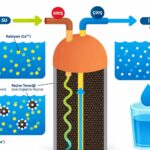
The most effective, reliable and scientifically proven method of removing heavy metals from water is Reverse Osmosis (RO) technology. This system passes water through a semi-permeable membrane at high pressure. The membrane pores are so small (about 0.0001 microns) that they only allow the passage of water molecules. Heavy metal ions such as arsenic, lead and mercury cannot pass through these pores due to their large molecular structures and are discharged from the waste water line.
Tests show that the use of a water purifier with a quality membrane filter removes between 90% and 99% of heavy metals from water. The growth of the global heavy metal treatment market also proves the confidence of consumers in this technology.
Activated Carbon Filtration
Activated carbon filters are very successful in retaining (adsorption) chlorine, bad taste and odour, pesticides and some organic compounds thanks to their large surface areas. However, they are not sufficient alone when it comes to heavy metals. A standard carbon filter cannot completely remove lead or arsenic dissolved in water.
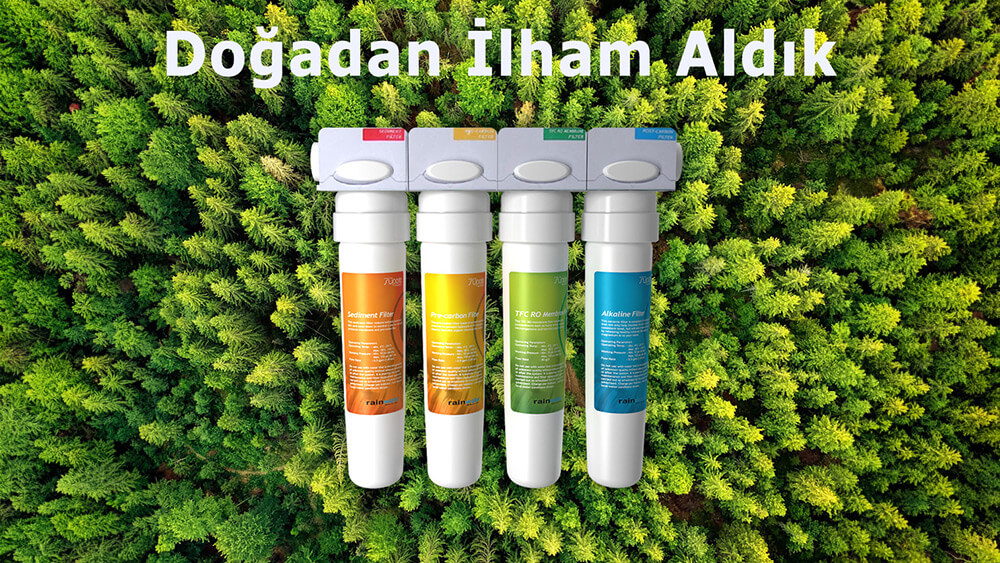
This is why the best treatment systems are hybrid: In a preliminary stage, sediment and coarse impurities and chlorine are removed by a water purification filter (carbon), then the water is passed to the membrane (Reverse Osmosis) filter, which does the main work. Relying solely on the carbon filter does not eliminate the risk of heavy metals.
Misconceptions Does Boiling Water Clean Water?
The popular idea that “if I boil the water, the germs will die and the water will be clean” is true for bacteria, but absolutely wrong for heavy metals. Boiling can even make the situation worse. When you boil water, the water evaporates, but heavy metals do not evaporate, they remain in the container. As the amount of water decreases, the metal concentration increases. In other words, boiled water becomes more concentrated and dangerous for heavy metals.
TDS Value and Measurement
TDS metres are used to understand the concentration of dissolved solids in water. However, the TDS value alone does not tell which heavy metals are in the water; it only indicates how “full” the water is. Although a low TDS value usually indicates purer water, specific heavy metal analysis can only be done in a laboratory setting. Nevertheless, TDS measurement is a practical indicator to monitor the performance of home RO devices.
What Should You Do for Safe Water?
In an age when 2.2 billion people worldwide do not have access to safe water, ensuring your own water safety is not a luxury but a necessity. Heavy metals in water pose a great threat to our health as they are odourless, tasteless and invisible to the eye. This risk cannot be ignored, especially for children of developmental age and those with chronic diseases.
If you suspect that the quality of your mains water or the plumbing in your building has deteriorated, you should not take any risks. The surest solution to these contaminants, where traditional methods such as boiling do not work, is to use a certified water purifier with Reverse Osmosis technology. By removing not only heavy metals but also microplastics and bacteria from your water, you can create a safe and healthy source for your family with every sip. May your health be as clear as the water you drink.
Frequently Asked Questions
What are heavy metals in water?
The most common and risky elements are lead (Pb), mercury (Hg), arsenic (As), cadmium (Cd), chromium (Cr) and nickel (Ni). These accumulate in the body and cause poisoning.
Are there heavy metals in tap water?
Even if municipalities treat water according to standards, there is always a risk of heavy metals in the water flowing from your tap due to old pipes (lead, copper) in your building or contamination in tanks.
How to remove heavy metals from water?
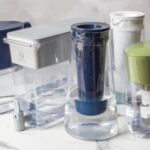
The most effective method is Reverse Osmosis systems. These systems remove up to 98% of heavy metals from water. Boiling or simple pitcher filters do not remove heavy metals.
How to recognise heavy metal poisoning?
In acute poisoning, nausea and vomiting occur; in chronic poisoning, symptoms such as fatigue, joint pains, developmental disorders and organ failure occur over time.
 Copy Blog Link