TR
TR
 7 October 2026
What is a tap filter, and what does it do?
In many homes, you’ll see a small, transparent device fitted to the end of the tap. This is a tap-end filter and is one of the simplest, most cost-effective water purification solutions available for the home. It is particularly popular amongst tenants, flat dwellers and users who wish to test the system before investing in a larger unit, as it is easy to install and delivers immediate results. However, using it without fully understanding exactly what it does – what it filters out and what it does not – can lead to expectations that do not match reality. In this article, we examine in detail the working principle of the tap-end filter, its limitations and how it differs from a full-capacity water purification system.
| Important Notes: Tap-end filters generally consist of a sediment layer and an activated carbon layer; they reduce the smell of chlorine and sediment/particles but do not significantly reduce TDS (total dissolved solids).They are not a substitute for a full-capacity water purification system; they are not a sufficient solution on their own for water hardness (limescale) and heavy metals. The lifespan of the filter cartridge varies depending on the manufacturer; using an expired filter carries a risk of bacterial growth rather than simply cleaning it — the cartridge must be replaced regularly.Compatibility with standard tap spout diameters should be checked before installation, as it may not fit every tap. |
What is a tap-end filter?
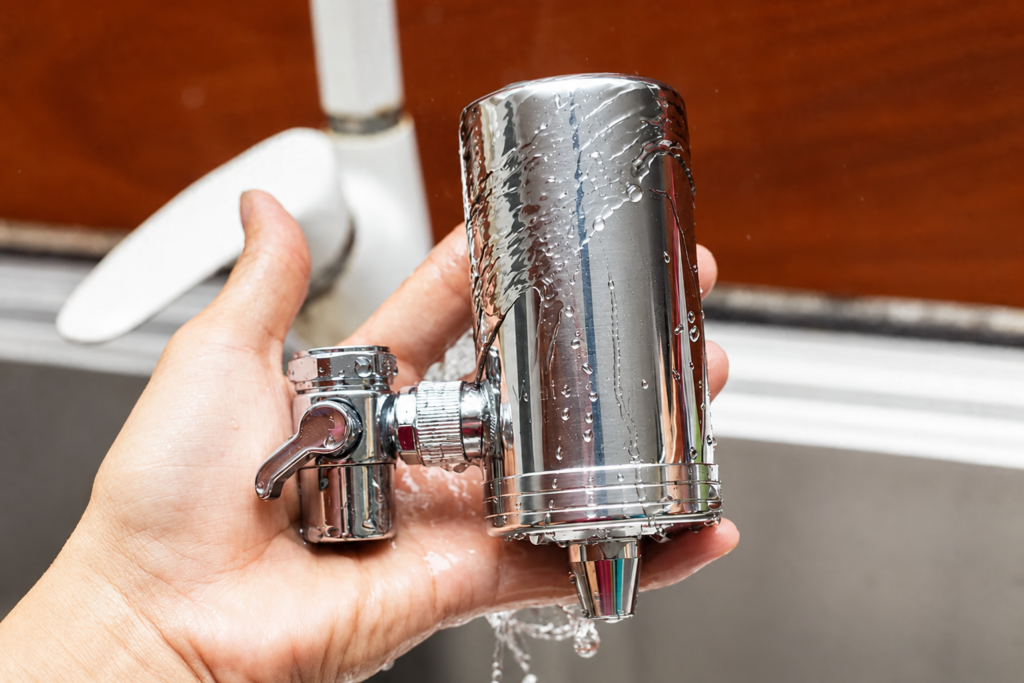
A tap-end filter is a small water-purification device that fits directly onto the tap spout and filters the water passing through it in a matter of seconds. It usually consists of a sediment layer and an activated carbon layer; it is designed to reduce the smell of chlorine in the water and trap visible sediment. It can be fitted and removed in a matter of minutes using an adapter, without the need for any electrical or plumbing alterations.
These products are generally small cylindrical cartridges with plastic or stainless steel bodies, secured to the tap by a threaded connection or a clip mechanism. Whilst some models pass the water directly through the filter, others feature a lever that allows you to switch between filtered and unfiltered flow; this enables the water to flow directly for tasks such as washing up, where filtration is not required.
How Does a Tap Filter Work?
The operating principle is quite simple: as the water flows from the tap, it passes through the filter housing and is filtered through a series of layers. This process requires no electricity, pump or pressure assistance; the entire system operates using the home’s own water pressure.
What Layers Does It Consist Of?
Most tap-mounted filters consist of two main layers. The first layer is a fine-pored sediment filter that traps sand, rust particles and visible sediment. The second layer is activated carbon; the carbon’s porous structure improves the taste and odour of the water by trapping chlorine molecules and certain organic compounds on its surface. In addition, some advanced models may also include a fine polypropylene element or a KDF (tin-copper alloy) layer; this layer helps to reduce certain heavy metals and bacterial growth to a limited extent.
Which Pollutants Does It Reduce, and Which Does It Not?
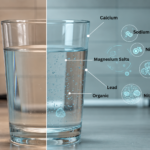
Tap-end filters can significantly reduce the smell of chlorine, visible sediment and certain organic substances; this markedly improves the taste and smell of the water. However, hardness minerals such as calcium and magnesium, which are present in the water in dissolved form, pass through the activated carbon layer largely unaffected. Therefore, a significant reduction in the TDS (total dissolved solids) value should not be expected. Similarly, the filter cannot effectively remove certain dissolved inorganic substances, such as nitrates and fluoride, and does not, on its own, guarantee the microbiological safety of the water; consequently, it is not sufficient to render water from an unsafe source safe to drink.
What is the difference between a tap-mounted filter and a water purifier?
A full-capacity water purification system is a a multi-layered filtration system (such as sediment, carbon and membrane) and treats water more comprehensively; it can reduce hardness, TDS and a much wider range of contaminants. A tap-end filter, on the other hand, is a single- or two-stage, quick and economical preliminary solution; whilst installation and running costs are low, its purification capacity is correspondingly limited. It is a more appropriate approach to view these two products not as substitutes for one another, but as two distinct solutions catering to different levels of need. Whilst a tap-end filter may be sufficient for minor day-to-day issues (odour, taste, visible sediment), for a comprehensive and permanent solution to water quality issues, under-sink water treatment units are required.
How Do You Fit a Tap Filter?
The general installation steps are as follows: first, unscrew the standard air mixer (aerator) at the end of the tap by turning it anti-clockwise. Next, select and fit the adapter from the set supplied with the filter that fits the tap spout; most manufacturers provide several different adapters in the box to ensure compatibility with various tap types. The filter body is screwed onto the adapter or secured using a clip mechanism. Once fitted, it is recommended to run the water for a few minutes to flush any residual carbon dust from the system and remove any air bubbles. As not all tap spouts are the same diameter, it is essential to check the compatibility of the tap’s internal and external thread sizes before purchasing; otherwise, leaks may occur.
When Should the Filter Be Changed?
The service life of a filter cartridge varies depending on the volume of water used and the quality of the mains water; the manufacturer’s instructions usually specify a capacity in litres or a period in months. A noticeable reduction in water flow rate, the reappearance of an odour, or a change in the taste of the water are practical indicators that the filter is reaching the end of its capacity. An expired filter may, over time, release the contaminants it has trapped and may pose a risk of microbial growth in a damp environment; therefore, using a calendar-based reminder is a safer approach than simply waiting for visible signs to appear.
What Should You Bear in Mind When Using a Tap Filter?
To ensure the filter operates safely and has a long service life, there are a few points to bear in mind. Firstly, the outer surface of the filter housing should be wiped with a damp cloth at weekly intervals to remove soap scum and limescale build-up. In pipes with very high water pressure, the seals at the connection points must be checked regularly for leaks. If the filter is not to be used for a prolonged period (for example, after a holiday), the part of the system that has remained filled with stagnant water must be flushed by running the water for a few minutes before resuming use. Finally, the filter must not be used with water sources of uncertain microbiological safety, such as untreated well or spring water; a separate and comprehensive water treatment solution should be considered for such waters.
For Whom Is a Tap-End Filter Sufficient, and For Whom Is It Insufficient?
For users who are bothered by the smell of chlorine in the mains water supply, wish to reduce visible sediment, and are looking for a quick, low-cost solution, a tap-end filter is a sensible place to start. It also offers the advantage of not requiring any permanent alterations to the plumbing for tenants or those staying for a short period. However, for users in areas with high water hardness, those concerned about TDS levels, those with concerns about heavy metal contamination, or those using an untreated source such as well or spring water, this filter alone will not be sufficient; in such cases, a multi-stage water treatment system should be considered.
Frequently Asked Questions
What is the device that fits onto the end of the tap?
It is usually either a standard air mixer (aerator) or a tap-mounted filter. Whilst the aerator simply softens the water flow and reduces splashing, the filter version is also designed to purify the water and contains a layer of sediment and activated carbon.
What is a tap filter used for?
As described above, it improves the sensory quality of the water, particularly by removing the smell of chlorine and visible sediment. It can significantly alter the taste and smell of the water, but does not significantly affect its hardness or the amount of dissolved solids.
Does a limescale filter fitted to a tap actually reduce water hardness?
No. Activated carbon and sediment filters do not significantly remove hardness minerals; therefore, even products referred to in marketing terms as ‘limescale filters’ do not actually solve the problem of hardness. Water softening solutions or multi-stage water treatment systems should be considered for limescale problems.
If you’re looking for a more comprehensive and long-term solution for your home, water purification system options .
 Copy Blog Link