TR
TR
 7 October 2026
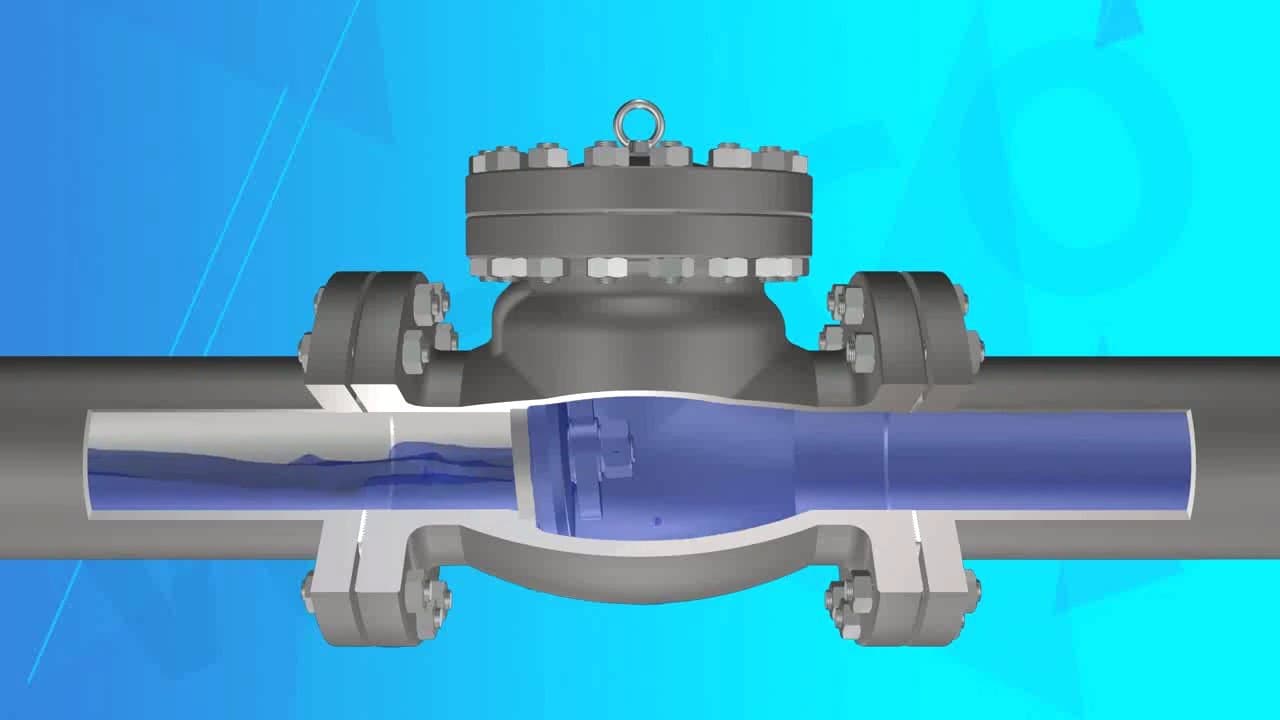
One of the small but critical components you will see when you open up a water purification system is the check valve. Although this component does not immediately catch the eye, it works quietly to ensure the system operates correctly and functions trouble-free for years without most users even realising it is there. In this article, we explain what a check valve is, how it works and its role in water purification systems in simple terms.
| Important Notes: A check valve is a mechanical component that ensures water flows in only one direction within the system and prevents back-flow.In water treatment systems, it is generally positioned upstream of the membrane or near the tank inlet; it prevents treated water from flowing back into the raw water supply or the membrane.A check valve fitted in the wrong direction or a faulty one can lead to the unit operating inefficiently — however, this article is not a troubleshooting guide, but rather an explanation of what the component is. |
What is a Check Valve?
A check valve is a simple mechanical component that allows the fluid within a pipe or line to flow in only one direction, automatically preventing flow in the opposite direction. It opens and closes solely due to a pressure difference, without requiring any electricity or external intervention. It is a very common component used in a wide range of applications, from water treatment systems to heating systems, from the automotive sector to agricultural irrigation and industrial pump systems.
How Does a Check Valve Work?
Inside a check valve, there is a disc, ball or spring mechanism that moves in response to the pressure of the fluid. When water flows in the correct direction, this mechanism opens under the pressure of the flow and allows the water to pass through. When the flow direction reverses or the pressure drops, the mechanism closes automatically and prevents backflow. This operation is entirely passive; the valve responds solely to the physical pressure difference, without requiring any sensors or control signals.
Where is the check valve located in a water purifier, and what does it do?
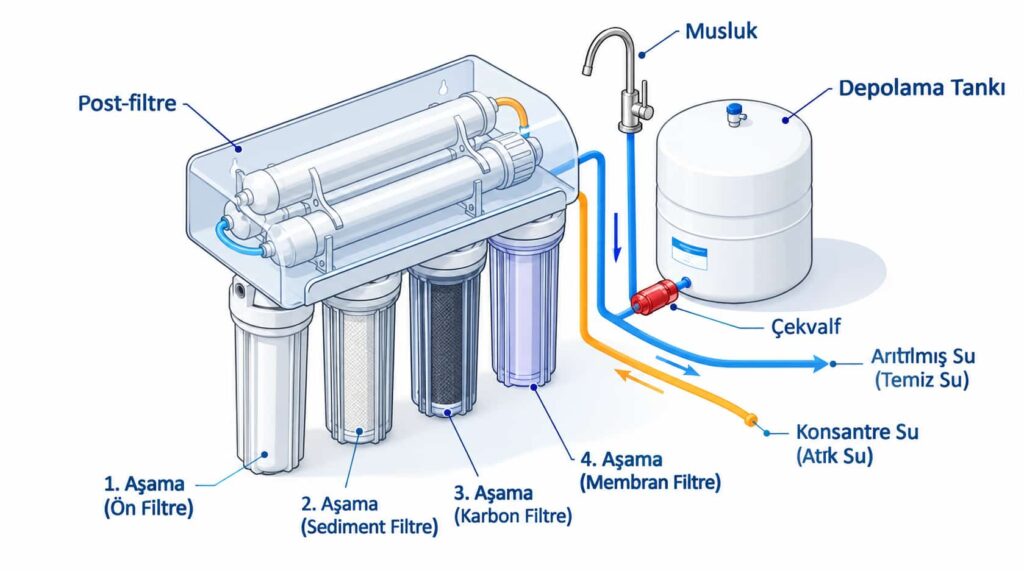
In water purification systems, the check valve is usually near the membrane or on the pressurised tank line. Its function is to prevent treated water from flowing back into the raw water line or back into the membrane. This ensures that the pressure balance across the membrane is maintained and that the quality of the treated water is not compromised by mixing with raw water due to backflow. In particular, reverse osmosis systems, it is crucial for the efficient operation of the membrane that water does not flow back when the system is shut down whilst the tank is full.
What Happens If There Is No Check Valve?
If there is no check valve in the system, treated water may flow back when the pressure balance changes and come into contact with the membrane again. Over time, this situation may adversely affect the membrane’s efficiency and cause the unit to operate below its designed performance. Backflow may also cause the pressure in the tank to drop sooner than expected and result in the system operating more frequently. This section is not a troubleshooting guide; its sole purpose is to explain the function and importance of the component.
What Are the Different Types of Check Valves?
Common types of check valves include spring-loaded check valves, which feature a spring-supported disc mechanism, and ball-type check valves, in which a small ball is lifted from its seat by pressure to allow flow. In larger industrial systems, swing-check valves are also used. In water treatment units, small-sized, low-pressure spring-loaded or ball-type valves are generally preferred; thanks to their compact design, these types can be easily integrated into the unit’s housing.
How Does a Check Valve Work in Conjunction with Other Water Treatment Components?
The check valve does not operate in isolation within a water treatment system, but works as an integrated whole in conjunction with a pressurised tank, a membrane and various solenoid valves. For example, in reverse osmosis systems, the system must stop automatically when the tank is full; at this point, the check valve prevents the pressurised water inside the tank from exerting back pressure on the membrane. Similarly, another check valve on the pipe leading to the tap prevents the treated water from moving in unexpected directions within the system when the tap is turned off. The coordinated operation of these components is part of the overall system that ensures the unit operates within its designed pressure range and at the intended efficiency.
Why Should Check Valve Inspection Be Part of Routine Maintenance?
As a check valve is a moving mechanical part, sediment or mineral deposits left behind by the water passing through it over time can slow down the mechanism’s movement. For this reason, during the periodic maintenance of water treatment units, technical staff also carry out a general inspection of the check valves in the system. This section is not intended to describe a fault symptom or a troubleshooting step, but rather to explain why the check valve is included as a component requiring regular maintenance; if you notice any change in performance in your unit, you are advised to contact an authorised technical service.
What Should You Look Out for When Choosing a Check Valve?
When a water treatment equipment manufacturer selects a check valve, they pay attention to the component’s operating pressure range, whether the body material is suitable for long-term contact with drinking water (such as food-grade certified plastic or stainless steel), and whether the connection dimensions are fully compatible with the system’s other components. A check valve made from low-quality materials may harden over time or fail to close properly; this reduces the overall reliability of the system. For this reason, although a check valve is a small component, it is one of the components carefully selected during the design of the unit.
Frequently Asked Questions
Why is a non-return valve fitted?
It is fitted to prevent backflow and to maintain the pressure and flow direction within the system. In water treatment systems, this is important for safeguarding the quality of the membrane and the treated water.
Where are check valves fitted?
As well as in water treatment systems, they are also used in general plumbing, heating systems, agricultural irrigation networks and various industrial pumping applications; they can be found in any system where the flow must be unidirectional.
What is the difference between a check valve and a solenoid valve?
A check valve operates entirely passively and responds only to a pressure difference; a solenoid valve, on the other hand, is a controlled component that opens and closes in response to an electrical signal. In water treatment systems, the two are generally used together for different purposes.
If you would like to find out more about the other components inside a water purification system, please refer to our water purification system glossary , where we explain the general structure and terminology of the system, and or .
 Copy Blog Link