TR
TR
 7 October 2026
For those who wish to purify water without taking up space on the kitchen worktop or tampering with the plumbing, a water-purifying jug is one of the first solutions that springs to mind. This product, which filters water within a few minutes from the moment you fill it until you drink it, is particularly favoured in small households and offices because it is ready to use straight out of the box and is inexpensive. However, it actually has a fairly limited but practical filtration capacity and is not a suitable solution for every water source. In this article, we examine in detail how the jug works, what it filters out, what it does not filter out, and how it should be maintained.
| Important Notes: Jugfilters generally contain activated carbon (sometimes ion-exchange resin); they reduce the smell of chlorine and some heavy metals, but do not significantly reduce TDS or bacteria.They are suitable for mains water; they are not recommended for untreated well or spring water due to the microbiological risk. The filter cartridge’s lifespan depends on the volume of water filtered; if not replaced regularly, it may release the contaminants it has filtered back into the water.If the jug is not cleaned regularly (weekly), there is a risk of biofilm forming on the inner surface. |
What is a water filter jug?
A water filter jug is a portable water filtration product in which water poured into the upper chamber flows by gravity through the filter cartridge into the lower chamber. The filter cartridge typically contains activated carbon and, in some models, ion-exchange resin as well. It offers a practical solution for everyday use, requiring neither electricity nor a mains connection.
Jugs usually have a capacity ranging from 1.5 to 4 litres and are designed to fit through the fridge door. Depending on the product, it may take a few minutes for the water poured into the upper chamber to filter down into the lower chamber; therefore, this is a water purification method that requires a short wait rather than being instantaneous.
How Does a Water-Filtering Jug Work?
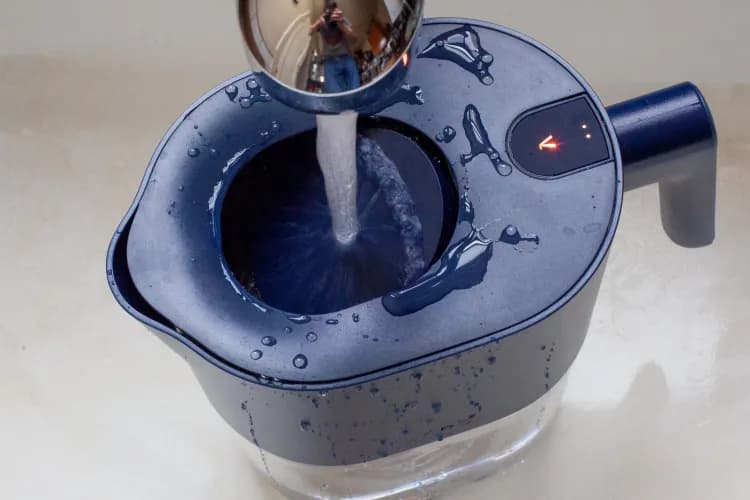
The water poured into the upper section of the jug flows through the filter cartridge by gravity. The activated carbon layer inside the cartridge traps the compounds that affect the chlorine odour and taste of the water; the ion-exchange resin in some models can reduce heavy metals to a limited extent. Once the water has passed through the cartridge, it collects in the lower chamber and is ready to drink. The system is entirely passive; it requires no electricity, pump or pressure source, and operates solely by gravity.
Which Pollutants Does It Reduce, and Which Does It Not?
Water filtration jugs can reduce the smell of chlorine, certain organic compounds that affect the taste, and limited amounts of heavy metals. However, they do not significantly reduce the TDS value, do not remove water hardness (limescale) and do not provide a reliable barrier against microbiological risks such as bacteria or viruses. For this reason they are a suitable additional filtration stage for mains water ; they are not recommended for water of unknown origin or untreated water. According to the manufacturer, some models may also retain microplastic particles to a certain extent; however, as there is no standard certification in this regard, such claims should be viewed with caution.
Are Water-Filtering Jugs Healthy?
A jug that is cleaned regularly and has its filter cartridge replaced on time reduces the smell of chlorine, thereby improving the perceived drinkability of the water; in this respect, it can be regarded as a healthy habit. However, if the jug is not kept clean or continues to be used after the filter’s lifespan has expired, the risk of biofilm formation in a damp environment increases, and the jug may begin to contaminate the water rather than purify it. From a health perspective, what matters most is not the product itself but whether it is maintained regularly; a jug that is neglected can have more adverse consequences than one that is not used at all.
When Should the Filter Cartridge Be Replaced?
The service life of a filter cartridge is generally determined by the total volume of water passed through it and is specified in the manufacturer’s instructions in litres or weeks. In a household where the filter is used intensively, this period may be shorter. If the cartridge is continued to be used after its service life has expired, it may gradually release the contaminants it has trapped, and the water flow rate may slow down noticeably; this slowdown can be regarded as a practical warning that it is time to replace the cartridge.
How Should a Water-Filtering Jug Be Cleaned and Stored?
The upper and lower chambers of the jug should be cleaned at least once a week with lukewarm water and a soft brush; avoid using harsh detergents, and ensure they are thoroughly rinsed. The corners of the chambers and the lid seal, in particular, are the areas where biofilm build-up is most commonly found, and extra care should be taken with these areas. The jug should be stored in a cool place out of direct sunlight; if it is not to be used for a long period, it should be kept empty and dry. The risk of mould forming increases in jugs left in damp conditions, so they should not be closed until they are completely dry after being washed in the dishwasher.
What is the difference between a water filter jug and a water purifier?
Water purification systems operate using multi-stage filtration (such as sediment, carbon and membrane filters) and can reduce water hardness, TDS levels and a much wider range of contaminants. A water filter jug, on the other hand, is a single-stage solution with limited capacity; whilst practical for small daily needs, water purification systems are a more suitable option for those seeking a comprehensive and permanent purification solution. The jug can also be considered alongside other complementary solutions, such as filtered water dispensers, in environments where installing a water treatment system is not feasible, such as offices, guesthouses or temporary accommodation.
What Should You Look for When Choosing a Water Filter Jug?
When choosing a jug, the first thing to look at is the capacity of the filter cartridge; a low-capacity cartridge may need to be replaced much more frequently than expected in a large household, which can increase costs in the long run. It is also important that the tank is made from food-grade, BPA-free plastic or glass/stainless steel; cheap, low-quality plastic tanks may absorb odours over time. A leak-proof lid seal and a tank opening wide enough to facilitate cleaning are practical details that make daily use easier. Models with a very slow water flow rate may negatively affect the user experience during heavy use; therefore, filtration time should also be included among the evaluation criteria.
Common Mistakes When Using a Jug
One of the most common mistakes is to start using the filter cartridge immediately after removing it from its packaging, without carrying out the initial rinsing step recommended by the manufacturer; this can cause carbon dust residue to mix into the water during the first few uses. Another common mistake is filling the jug with hot water; hot water can adversely affect the structure of the filter media, and manufacturers generally recommend using only cold water. Finally, it is also a common mistake for users not to follow the filter replacement schedule and to refrain from replacing the cartridge unless there is visible contamination; however, the filter’s holding capacity can become full without this being visually apparent.
The Advantages and Limitations of Water-Purifying Jugs
The most notable advantage of the jug is that it can be used straight out of the box without any installation and is easy to transport; this feature makes it a practical option for people who move house frequently or those living in rented accommodation. The low initial cost also offers an attractive starting point for users trying water filtration for the first time. Its limitations, however, include its small capacity, which means it needs to be refilled frequently in a large household, and the fact that the level of purification is limited to sediment and carbon filtration. Being aware of this balance helps to set realistic expectations for the jug.
Frequently Asked Questions
Are water-filtering jugs healthy?
If regular maintenance is carried out, then yes, it improves the drinking experience by reducing the smell of chlorine; however, if the filter has reached the end of its service life or the jug has not been cleaned, then no, because a damp environment can provide a breeding ground for microbes. It all depends on usage habits.
What factors influence the prices of water-filtering jugs?
Prices vary depending on factors such as filter technology, tank capacity, cartridge replacement frequency and the material of the housing; rather than giving a general price range, it is more advisable to compare product specifications according to your needs.
Does water in a jug go off overnight?
Treated water is generally safe if left to stand overnight at room temperature in a clean, sealed jug; however, water left exposed for a long time (more than a few days) may lose its quality through contact with dust and microorganisms in the air. It is recommended that water be kept in a cool place and stored in a sealed container.
If you require a more comprehensive and continuous water treatment solution, water purification system options .
 Copy Blog Link