
 TR
TR
 10 September 2026
The question ‘What is ppm? ’, which arises in many areas of our daily lives – from the quality of the drinking water we consume to the cleanliness of the air we breathe and the error rates on industrial production lines – actually refers to a unit of measurement that forms the basis of quality and precision. This term, formed from the initial letters of the English phrase ‘Parts Per Million’, translates into Turkish as ‘one part in a million’. Used to express the concentration of substances in very small quantities, this dimensionless ratio translates microscopic-level analyses into comprehensible figures. Brands such as Rainwater, which develop advanced water purification systems, aim to achieve the most ideal values for your health by measuring dissolved substances in water with millimetre-level precision.
What Does PPM (Parts Per Million) Mean? Basic Definition and Meaning
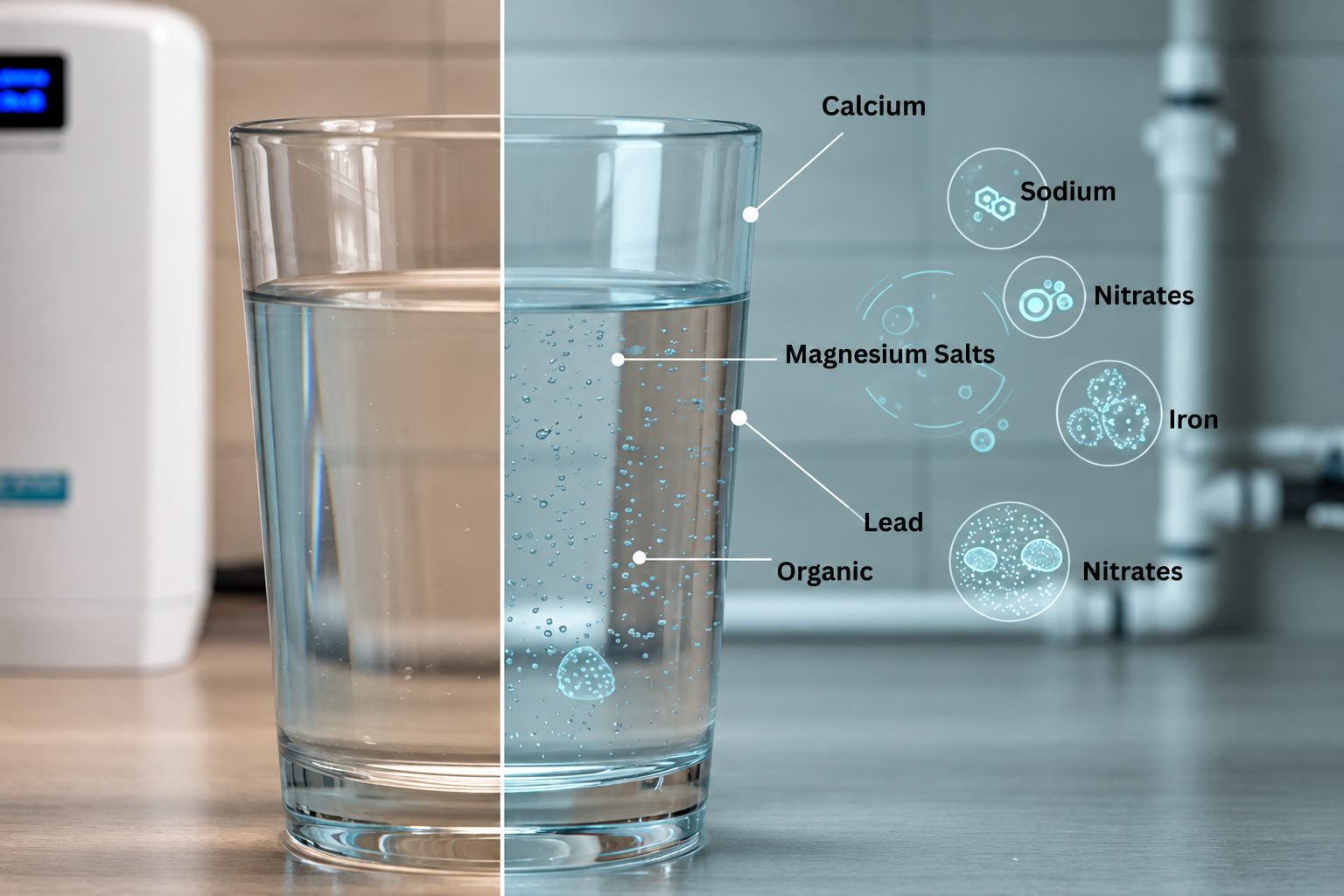
PPM is a unit of concentration representing the amount of a component in a mixture or solution as one part per million of its total mass or volume. In scientific notation, this expression corresponds to the coefficient 10^(−6); it is not a direct physical quantity such as a kilogram or a metre, but rather a mathematical coefficient obtained by comparing two identical units, just like a per cent (%) or per mille (‰).
A Practical Way to Understand the Concept of PPM: Concrete Examples from Everyday Life
It can sometimes be difficult to visualise the concept of ‘one part per million’. To put this ratio into perspective, imagine adding just 1 gram of salt to a large water tank with a capacity of 1,000 litres (1 tonne). Once the salt has completely dissolved, the salinity of the water in that tank will be exactly 1 PPM.
Similarly, if you were to pour approximately one glass of a different liquid into a huge swimming pool built to full Olympic standards, the resulting dilution would correspond to a level of 1 PPM. If we consider the concept of time, a period of approximately 32 seconds within a year represents a time interval of 1 PPM. These examples clearly demonstrate just how small and precise the quantities are that this unit is used to measure.
A Comparison of PPM with Other Units of Concentration: The Difference Between Per Cent (%), PPB and PPT
In analytical chemistry and laboratory settings, the units used change as the concentration of a substance decreases. For more precise measurements, terms such as PPB (parts per billion) and PPT (parts per trillion) come into play.
Table 1: Comparison and Conversion Matrix for Units of Concentration
| Unit | Meaning | Scientific Notation | Equivalent in an Aqueous Solution | Percentage (%) Equivalent |
| % | One per cent (1/100) | 10−210−2 | 10,000 mg/L | 1 per cent |
| ‰ | One in a Thousand (1/1000) | 10−310−3 | 1,000 mg/L | 0.1 per cent |
| PPM | One in a Million | 10−610−6 | 1 mg/L | 0.0001 per cent |
| PPB | One in a Billion | 10–910–9 | 1 µg/L (microgram) | 0.0000001 per cent |
| PPT | One Trillionth of a Piece | 10–12 10–12 | 1 ng/L (nanogram) | 0.0000000001 per cent |
How is PPM Calculated? Formulas and Practical Calculation Methods
PPM calculations are carried out using mass-based or volume-based formulas, depending on the physical state of the mixture to be analysed (solid, liquid, gas). Choosing the correct formula is of vital importance for the scientific validity of the result obtained.
Formula for Calculating PPM by Mass (Weight) (w/w)
In fertiliser analyses of solid mixtures or in areas such as soilless cultivation, mass-based calculations (w/ww/w – weight/weight) are used. The formula is quite simple: the mass of the substance of interest is divided by the total mass of the mixture, and the result is multiplied by 1,000,000. The most important rule to bear in mind here is that the masses being divided and the divisor must be in the same unit (for example, both in grams or both in milligrams).
Calculation of PPM by Volume in Liquid Solutions (w/v and mg/L Equivalence)
In the analysis of liquids, particularly water, volumetric (w/v) calculations are preferred. As the density of pure water is 1 kg/L, the rule that 1 PPM = 1 mg/L is accepted as standard in water chemistry. In other words, the mass of the dissolved substance in 1 litre of water, expressed in milligrams, directly gives us the PPM value.
Calculation of PPM in Gas Mixtures and in Air (v/v / PPMv)
In atmospheric and gas analysis, the volume-to-volume (v/vv/v) ratio is used, and this is generally expressed as PPMv. For example, according to NASA data, the global atmospheric carbon dioxide (CO₂) concentration has now reached levels of 420 PPM. This means that for every 1 million millilitres of the air we breathe, there are 420 millilitres of carbon dioxide gas.
Step-by-Step PPM Calculation Scenario with Solutions
Let us assume that a chlorination process is to be carried out in an industrial water tank. 15 grams (15,000 milligrams) of active chlorine have been added to a water tank with a capacity of 5,000 litres (5,000 kg).
- Formula: (Amount of solute / Total volume of solution) × 1,000,000
- First, we convert the units: 15 grams = 0.015 kg.
- Calculation: (0.015 kg / 5,000 kg) × 1,000,000 = 3 PPM. This calculation shows that the chlorine concentration in the tank is 3 PPM.
What is the PPM value in water quality and drinking water?
The term ‘PPM’ most commonly appears in water treatment and water quality reports. The water we drink is not simply made up of H₂O molecules; it contains various minerals, salts and metals absorbed from underground aquifers.
The Direct Relationship Between PPM and TDS (Total Dissolved Solids)
TDS (Total Dissolved Solids) refers to the total weight of inorganic salts (calcium, magnesium, potassium, sodium, etc.) and small amounts of organic matter present in water. The TDS value is measured in milligrams per litre (mg/L), which is directly equivalent to the PPM value. For this reason, when selecting domestic under-sink water purification systems, the TDS (ppm) value of the mains water is used as a reference to determine the appropriate filtration technology.
What Should the Ideal PPM Value Be for Safe Drinking Water?
Authorities responsible for setting drinking water standards worldwide have established specific upper limits to ensure the safety and taste of water. According to World Health Organisation (WHO) guidelines, the recommended maximum limit for TDS in drinking water is 500 PPM.
Table 2: Drinking Water PPM (TDS) Value Guide and Health Classification
| PPM Range | Water Quality and Taste Profile | Mineral Status and Treatment Recommendation |
| 0–50 ppm | Ultra-Pure / Demineralised Water | It is free from minerals. It is not recommended for regular consumption, as it is acidic. |
| 50–150 ppm | Ideal Drinking Water | It is the tastiest and healthiest option. It contains a balanced amount of calcium and magnesium. |
| 150–300 ppm | Good (Natural Spring Water) | It has an acceptable flavour profile. Most natural sources fall within this range. |
| 300–500 ppm | Limit Value (Hard Water) | It makes the water heavy and causes limescale build-up. Water treatment systems are recommended. |
| 500+ PPM | Unacceptable / High-risk | It contains high levels of salt and may contain heavy metals. It must be treated. |
Common Misconception: Does a PPM Value of Zero (0) Make Water Healthy?
There is a widespread but mistaken belief amongst consumers that ‘the lower the PPM value of water, the higher its quality’. Water with a PPM value of 0 is distilled (pure) water, which contains no minerals whatsoever. The human body requires essential minerals such as calcium and magnesium found in water for the proper functioning of the bones, muscles and nervous system. Consuming water with a PPM value of 0 on a regular basis can disrupt the osmotic balance within cells. For this reason, healthy drinking water should not have a PPM value of exactly zero, but should be maintained at a balanced level within the range of 50–150.
The Importance of PPM Values in Water Purification Systems and Reverse Osmosis Membrane Performance
One of the advanced technologies developed to filter out particles such as chlorine, heavy metals, limescale (calcium carbonate) and rust—which are found in high concentrations in mains water—is the Superior domestic drinking water system, which is a Reverse Osmosis (Reverse Osmosis – RO)-based devices. Semi-permeable RO membranes pass tap water – for example, water with a hardness of 400 PPM – through their microscopic pores, directing harmful particles into the waste water. Mineral filters are then used to naturally supplement the water with calcium, ensuring it reaches the ideal level of 80–120 PPM.
How is the PPM Value Measured in Water and Liquids?
Thanks to advancing technology, determining the concentration of liquids has moved beyond the laboratory and into our homes. Digital devices and test kits are used to carry out quick and reliable measurements.
How to Measure PPM Using a Digital TDS Meter?
In homes and industrial facilities, the purity of water is determined using pen-sized conductivity metres known as ‘Digital TDS Metres’. These devices measure the electrical conductivity (EC) of the dissolved ions in the water and automatically convert this value to parts per million (ppm). To take a measurement, simply dip the device’s sensor tip into a glass of water at room temperature. For an accurate measurement, it is recommended that the device has an ATC (Automatic Temperature Compensation) feature and that the sensor tips are regularly cleaned with distilled water.
Key Differences Between TDS (PPM) and pH
TDS and pH, two of the most commonly confused concepts, measure two completely different properties of water. Whilst a TDS metre measures the concentration of substances in water (in parts per million), a pH metre determines whether the water is acidic or alkaline (on a scale of 0–14). For example, whilst pure water with a very low PPM value may have a pH of 5.5 (acidic), water with a high PPM value to which carbonate has been added may have a pH of 9.0 (alkaline). For a comprehensive water analysis, these two parameters must be assessed independently of one another.
What Does PPM (DPPM) Mean in Quality Control and Industrial Production?
The PPM unit is encountered not only in chemistry but also in modern production and quality management processes. In industry, this concept is generally referred to as DPPM (Defect Parts Per Million). It is a critical performance indicator that shows how many out of every 1 million products coming off a factory production line are defective or non-conforming.
Lean Production and the 3.4 PPM Standard at Six Sigma Level
World-class manufacturing facilities operate according to the ‘Zero Defects’ philosophy. The Six Sigma (Lean Six Sigma) methodology, developed in this context, statistically measures process excellence. According to international Sigma sources, for a process to reach the 6 Sigma level, it must have no more than 3.4 defects per million production opportunities (3.4 PPM / DPMO). This means that the process operates flawlessly 99.99966 per cent of the time.
Table 3: The Relationship Between Sigma Levels and PPM in Lean Production and Quality Control
| Sigma Level | Defect Rate (PPM / DPMO) | Accuracy Rate | Industrial Commentary |
| 2 Sigma | 308,538 PPM | 69.146 per cent | Unacceptably high wastage. |
| 3 Sigma | 66,807 PPM | 93.319 per cent | It is a traditional production standard, but it is not competitive. |
| 4 Sigma | 6,210 PPM | 99.379 per cent | Minimum acceptance level for the automotive supply industry. |
| 5 Sigma | 233 PPM | 99.977 per cent | High-quality, optimised production lines. |
| 6 Sigma | 3.4 PPM | 99.99966 per cent | Operational excellence (Zero Defects) on a global scale. |
Formula for Calculating DPPM (Defective Parts Per Million) in Production
To determine a business’s quality performance, the DPPM calculation is carried out in accordance with American Society for Quality (ASQ) standards. The formula is as follows: (Number of Defective Products Detected / Total Number of Products Produced) × 1,000,000. For example, an electronic components manufacturer produced 250,000 circuit boards in a month, and quality control tests revealed that 12 of these were non-functional (defective). In this case, the result is (12 / 250,000) × 1,000,000 = 48 DPPM.
Other Sectors Where PPM Measurement Is Used and Critical Thresholds
As well as in the water and manufacturing sectors, the measurement of concentration levels in the millions plays a vital role in various other areas that determine our health and the balance of the ecosystem.
Air Quality, Greenhouse Gases (CO₂) and Limit Values for Toxic Gases
Gas sensors operate on a PPM basis when measuring indoor and outdoor air quality. According to indoor air quality data from the EPA (US Environmental Protection Agency), the maximum limit considered safe for carbon monoxide (CO) – an invisible killer – is 9 PPM. When carbon monoxide levels in an environment exceed 150 PPM, prolonged exposure can lead to loss of consciousness and fatal poisoning in humans. For this reason, continuous PPM-based gas monitoring systems are in operation in car parks, factories and mines.
Soilless Farming (Hydroponics) and Fertiliser Solution Concentrations
In hydroponic (soilless) systems—one of the modern agricultural technologies—the electrical conductivity and fertiliser concentration of the water supplied to the roots must be very precise to ensure the plants can absorb nutrients. Each plant species has a specific PPM range within which it can thrive. For example, whilst lettuce and leafy greens yield maximum results in fertiliser solutions ranging from 560 to 840 PPM, nutrient-hungry plants such as tomatoes require nutrient solutions in the range of 1,400 to 3,500 PPM.
Frequently Asked Questions About PPM
How many mg/L is 1 PPM?
In the analysis of liquid solutions such as water, 1 PPM corresponds exactly to 1 mg/L (1 milligram per litre). As the specific gravity (density) of water is taken to be 1 kg/L under standard conditions, 1 milligram of solid matter dissolved (1,000,000 milligrams) represents a concentration of 1 milligram of dissolved solid matter, which directly corresponds to one part per million (1 ppm).
Is it safe to drink water with a high PPM value? Is it harmful?
A PPM value above 500 indicates that the water has a high level of hardness and contains calcium, magnesium and, potentially, chlorine, sulphate or heavy metals. Such water is heavy on the stomach, can cause bloating and leaves a bitter or salty aftertaste. As consuming water with a very high PPM level for a prolonged period without treatment may lead to kidney strain, it is not recommended for consumption.
What should the PPM value of the water coming out of a water purifier be?
The PPM value of water produced by a high-quality Reverse Osmosis (RO) water purification system should ideally be between 50 and 150. When the membrane filter removes harmful substances from the water, this value may drop to as low as 10–20. However, thanks to the mineral filters in the system, which add natural calcium and magnesium to the water, the PPM level is balanced and raised to the 50–150 PPM range—the most suitable and palatable range for human health.
 Copy Blog Link

























