
 TR
TR
 9 September 2026
Nowadays, when it comes to industrial hygiene and modern water treatment technologies, consideration for human health and the environment is just as important as the effectiveness of disinfectants. One of the first questions that springs to mind in this context— ‘What is chlorine dioxide?’—refers to a powerful oxidising agent that eliminates pathogens without damaging the molecular structure of water. Chlorine dioxide (ClO₂), is an innovative molecule used across a wide range of applications—from drinking water networks to food sanitation, and from hospital sterilisation to agricultural irrigation systems—which eliminates the risks of odour, taste and carcinogenic by-products associated with traditional chlorination. In this comprehensive guide, we will examine in detail the chemical properties of chlorine dioxide, its mechanism of action, the fundamental differences between it and chlorine, and the standards for its use across various industries.
What is Chlorine Dioxide (ClO₂)? Its Molecular Structure and Chemical Properties
Chlorine dioxide, with the formula ClO₂, is a yellowish-green inorganic compound with a distinctive, pungent odour. Although it contains the element chlorine, which is part of the halogen group in the periodic table, it exhibits a completely different profile from free chlorine (Cl₂) in terms of its chemical behaviour and reaction kinetics. This difference stems from the molecule’s unique bond structure.
Free Radical Structure and Selective Oxidation Capacity
The chlorine dioxide molecule behaves as a free radical because it contains an unpaired electron in its structure. This property enables it to carry out a pure electron transfer (oxidation) rather than chlorination (the addition of a chlorine atom) when reacting with target microorganisms. Thanks to the 5-electron transfer potential inherent in its molecular structure, chlorine dioxide offers an oxidation capacity approximately 2.6 times higher than that of conventional chlorine. Compared to aggressive oxidants such as ozone and hydrogen peroxide, its redox potential of 1.57 V enables it to act as a ‘selective oxidant’ that targets only organic pollutants without causing damage to pipes and plumbing materials.
Physical Behaviour: Gaseous State, High Solubility in Water and Instability Dynamics
The most striking physical property of chlorine dioxide is that it does not occur naturally in liquid form; at room temperature, it is a gas and is highly soluble in water. However, this gaseous state is highly unstable. It poses a risk of explosive decomposition when its concentration exceeds 10 per cent by volume or its partial pressure exceeds 30 kPa at atmospheric pressure. Due to its incompressible and non-storable nature, chlorine dioxide is not transported in pressurised cylinders at industrial sites. It is always produced at the point of use as an aqueous solution or via in-situ generators.
How Does Chlorine Dioxide Work? Mechanism of Antimicrobial Action
The disinfecting power of chlorine dioxide stems from its ability to irreversibly disrupt the biochemical structure of microorganisms. The oxidation process takes place extremely rapidly and produces a broad-spectrum antimicrobial effect.
Lysis of the Microorganism’s Cell Wall and Inhibition of Protein Synthesis
When a pathogenic bacterium or virus comes into contact with chlorine dioxide, the ClO₂ molecule directly attacks the cell membrane. It disrupts the permeability of the cell wall by oxidising the lipids and protein building blocks (particularly amino acids such as tyrosine, tryptophan and cysteine) in the cell membrane. This single-electron oxidation reaction instantly halts the microorganism’s essential protein synthesis and disrupts intracellular metabolism. As a result, the bacterium, virus or cyst loses its viability within minutes.
Thorough Removal of Biofilm from Water Pipework
Over time, a biofilm layer—a sticky polysaccharide matrix formed by bacteria—develops on the inner surfaces of industrial and domestic water pipes. Whilst traditional disinfectants only destroy the outer surface of this layer, chlorine dioxide penetrates right down to the deepest layers of the biofilm because it remains in the water in its dissolved gaseous form. According to reports published by the American Water Works Association (AWWA), the use of chlorine dioxide achieves a reduction of 99.9 per cent (3-log) in the biofilm layer inside pipes – far exceeding that achieved by chlorine – thereby eradicating colonisation at its source.
Reasons Why Microorganisms Are Unable to Develop Resistance to Chlorine Dioxide
Antibiotics or certain chemical biocides can cause microorganisms to develop resistance over time through genetic mutation (for example, superbugs). However, the mechanism of action of chlorine dioxide is not genetic; it is based entirely on physical-chemical breakdown. As it directly destroys the cell wall and RNA/DNA components by oxidising them, no bacterium, fungus or virus can develop cellular resistance or immunity to chlorine dioxide.
What are the key differences between chlorine dioxide and conventional chlorine?
Although chlorine (Cl₂) and sodium hypochlorite (NaOCl) have been used as standard in water treatment for many years, modern industry is rapidly shifting towards chlorine dioxide. This shift is driven by very clear technical and chemical advantages.
Stable Disinfection Performance Across a Wide pH Range (pH 4–10)
When sodium hypochlorite (bleach/liquid chlorine) is added to water, it forms hypochlorous acid, and the disinfecting power of this acid decreases rapidly when the pH rises above 7.5. Chlorine dioxide, on the other hand, does not undergo hydrolysis but remains as a true dissolved gas in water. As a result, it maintains stable disinfection performance across a very wide range—from pH 4 to pH 10—without losing its efficacy, even in alkaline solutions.
Preventing the Risk of Trihalomethanes (THMs) and Carcinogenic Disinfection By-Products
When free chlorine reacts with natural organic substances such as humic acid in water, it triggers a hazardous halogenation process. This process results in the formation of carcinogenic (cancer-causing) disinfection by-products known as trihalomethanes (THMs) and haloacetic acids (HAAs). As you can see from our article on the harmful effects of chlorine, chlorine dioxide does not react with organic matter to form chlorine compounds; it reacts only with oxides. It therefore completely prevents the formation of THMs and HAAs.
Superior Efficacy Against Resistant Parasites Such as Giardia and Cryptosporidium
Cysts and protozoa such as Giardia lamblia and Cryptosporidium parvum, which are frequently found in drinking water sources, exhibit significant resistance to standard chlorination due to their thick protective membranes. Chlorine can only inactivate these parasites at very high doses and with prolonged contact times. Chlorine dioxide, however, ensures water safety by eliminating these resistant parasites within minutes, thanks to its ability to penetrate the cell wall.
What Is Chlorine Dioxide Used For? Main Uses and Sector-Specific Applications
Its high oxidising power and the fact that it is a clean agent that leaves no by-products make chlorine dioxide indispensable in virtually every sector of industry.
Drinking Water Treatment, Water Distribution Networks and Odour and Taste Removal
In municipal and urban water treatment works, chlorine dioxide is used to oxidise and precipitate dissolved iron and manganese in water, to break down phenol-based organic pollutants, and to remove unpleasant odours and tastes from the water. The United States Environmental Protection Agency (EPA), which sets residual standards for drinking water, has established the maximum residual limit for chlorine dioxide in water at 0.8 mg/L (ppm), a level considered safe for human health.
Industrial Cooling Towers and the Control of Legionella (Legionella pneumophila)
The Legionella pneumophila bacterium, which thrives in the cooling towers of hospitals, hotels and large industrial plants, causes Legionnaires’ disease, a fatal illness transmitted via the respiratory tract. This bacterium is protected from chlorine by hiding within the biofilm layer in pipes and within amoebae. According to the standards of the Centres for Disease Control and Prevention (CDC), which reference 12 years’ worth of data from Johns Hopkins Hospital, the application of chlorine dioxide in the water supply has provided definitive microbial control by reducing Legionella positivity from 47.4 per cent to 0.2 per cent.
CIP Pipe Cleaning and Carcass/Vegetable Washing in Food and Beverage Facilities
In the food industry, the residue-free cleaning of surfaces that come into contact with products is of vital importance. Chlorine dioxide is widely used in CIP (Clean-in-Place) systems, for the sanitisation of meat carcasses, and in washing water for fresh fruit and vegetables. In accordance with US Food and Drug Administration (FDA) guidelines, chlorine dioxide washes at concentrations of 40–120 ppm can inactivate surface pathogens on produce, thereby extending the shelf life of fresh food from 5 to 14 days. (Note: The relevant source is for information purposes only; FDA food regulations are subject to strict oversight.)
Installation of Drip Irrigation Lines in Agriculture and Management of Fungal Pathogens
One of the biggest problems encountered in agricultural production is the blockage of drip irrigation lines caused by fertiliser residues and algae. The application of chlorine dioxide dissolves calcium-based blockages in the pipes and removes algae. It can also be safely applied in soilless cultivation tanks to combat fungal diseases such as Fusarium and Phytophthora, which cause root rot. When applied at the correct dosage, it does not cause phytotoxicity (toxic effects) on plants.
Biocidal Surface Disinfection in Hospitals and Medical Settings
Chlorine dioxide solutions authorised as biocides are used in healthcare facilities for the disinfection of operating theatre surfaces requiring a high level of disinfection, the cleaning of endoscopic equipment, and wastewater sterilisation processes. Thanks to their sporicidal (spore-killing) effect, they minimise the risk of cross-contamination in medical settings.
What Are the Hazards of Chlorine Dioxide? Toxicity, Safety Thresholds and Risks
The safe use of chlorine dioxide, a potent chemical, depends on strict adherence to statutory threshold values and correct exposure limits. Uncontrolled use poses serious health risks.
Can Chlorine Dioxide Be Consumed? Serious Clinical Risks Associated with Oral Consumption
Drinking chlorine dioxide solutions undiluted or directly in quantities far exceeding the water supply safety limit (0.8 mg/L) poses a life-threatening risk. High-dose ingestion causes corrosive burns to the gastrointestinal tract, methaemoglobinaemia—which reduces the blood’s oxygen-carrying capacity—and acute kidney failure.
False Health Claims: The Dangers of MMS (Miracle Mineral Solution) and Official Warnings
In recent years, dangerous mixtures marketed online as ‘Miracle Mineral Solution’ (MMS) or the CD Protocol have been sold on the pretence that they cure a wide range of conditions, from autism to cancer. This is a completely baseless and deadly lie. According to data from the American Association of Poison Control Centres (AAPCC), 84.9 per cent of cases involving the ingestion of unregulated chlorine dioxide resulted in acute toxicity, with reports of severe vomiting and liver damage. Chlorine dioxide has no place in medical treatment.
Exposure to Inhalation in the Gas Phase and OSHA/EPA Occupational Safety Standards
In the event of a chlorine dioxide gas leak at industrial sites, serious damage to the respiratory tract may occur. According to Occupational Safety and Health Administration (OSHA) standards, the maximum permissible exposure limit for chlorine dioxide that a worker may inhale during an 8-hour shift is strictly limited to 0.1 ppm (0.28 mg/m³).
How is Chlorine Dioxide Produced, Safely Applied and Stored?
Due to its instability in its gaseous form, the logistics of chlorine dioxide require specialised engineering. Depending on the scale of the application, two different methods are preferred.
In-Situ Generator Systems Using Sodium Chlorite Precursors
In large-capacity municipal water treatment works and cooling towers, chlorine dioxide is produced on-site (in situ) using specialised generators. These systems produce chlorine dioxide gas on the spot by mixing a sodium chlorite (NaClO₂) solution with hydrochloric acid or chlorine gas in a reactor under vacuum, and inject it directly into the water supply. This eliminates any risk of explosions caused by storage.
Storage and Dosing Control of Stabilised Liquid and Tablet Solutions
Ready-to-use, stabilised chlorine dioxide liquids or effervescent tablets, approved by the Ministry of Health, are produced for smaller-scale food businesses, agricultural greenhouses and commercial buildings. These products must be stored in dark, cool storage areas away from sunlight. When added to water, precise dosing control at the ppm level is carried out using photometric measuring devices to ensure the concentration remains within safe limits.
Domestic and Industrial Filtration of Tap Water Disinfected with Chlorine Dioxide
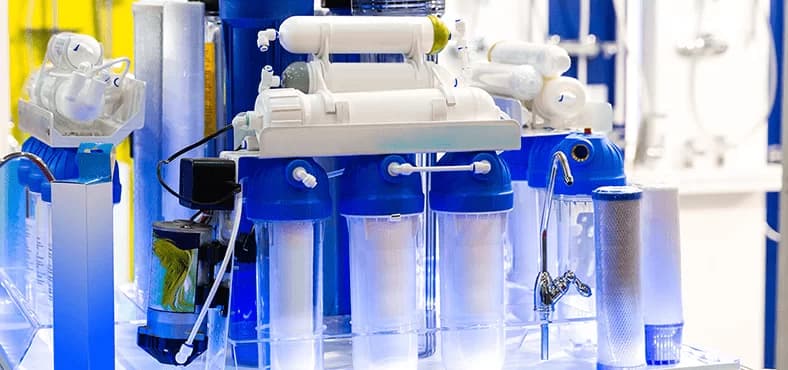
Chlorine dioxide, added to the mains water supply by local authorities to ensure biological safety, protects the water until it reaches our taps. However, to make this water fit for drinking, it must be purified of chemical oxidants and the chlorite ions formed as a result of the reaction. Reverse osmosis (RO) water treatment technologies, developed to achieve flawless purity in tap water, utilise high-density activated carbon block filters to trap chlorine dioxide residues at a molecular level, thereby ensuring the water retains its natural mineral balance and alkaline value for consumption.
Frequently Asked Questions (FAQs)
We have compiled below the technical details and practical questions that users most frequently search for on search engines regarding this chemical compound.
Can chlorine dioxide be used instead of standard bleach for household cleaning?
No, it cannot be used. Chlorine dioxide is an industrial-grade biocidal product and requires precise dosing, ventilation and professional protective equipment during application. Preparing concentrated chlorine dioxide mixtures in a domestic setting carries risks of gas release and respiratory poisoning. For domestic cleaning, it is essential for safety reasons to use commercially diluted, standard household cleaning products.
At what ppm level is chlorine dioxide safe in drinking water?
In accordance with the guidelines of international health authorities (the EPA and the WHO) and the Turkish Standards Institute (TS 266), the maximum residual chlorine dioxide limit at the point of supply for drinking and domestic water has been set at 0.8 mg/L (ppm). Furthermore, the chloride ion—a by-product of the reaction—must not exceed a level of 1.0 mg/L. Water treated to remain below these values is considered safe for consumption.
Does chlorine dioxide cause phytotoxicity in plants in agricultural irrigation?
Provided the applied dosage is kept within the recommended limits (generally between 1 and 5 ppm), chlorine dioxide does not cause any phytotoxicity in plants, i.e. toxic leaf or root burn. However, high concentrations (50 ppm and above) used in shock treatments to flush drip irrigation lines whilst the system is empty may damage the root flora if the water is supplied to the crops before the line has been thoroughly flushed.
What does chlorine dioxide smell like, and what should you do in the event of a gas leak?
The odour of chlorine dioxide is quite pungent and irritating, resembling a mixture of the odours of chlorine (bleach) and ozone. When the concentration exceeds the 0.1 ppm threshold, the odour is easily detectable by the human nose. If this odour is strongly detected in an enclosed plant room, the area must be evacuated immediately, emergency ventilation fans must be activated, and no one should enter the premises without a mask until authorised health and safety personnel have intervened.
 Copy Blog Link

























