
 TR
TR
 10 September 2026
The question ‘What is reverse osmosis?’ has become a focal point for a wide range of people, from discerning consumers seeking healthy, clean and safe drinking water in their homes to industry professionals seeking flawless water purity on production lines. Commonly known as RO (Reverse Osmosis), this technology is the most advanced filtration method, purifying water of heavy metals, chemicals and microorganisms through separation at the molecular level. As pollution levels in mains water rise and infrastructure issues compromise the quality of the water we use in our homes, reverse osmosis technology will always be the first scientific solution you encounter in your search for the best water purification system for your home.
In this comprehensive guide, we will examine the working principles of reverse osmosis, its effects on health, and its domestic and industrial applications in the light of objective engineering data. Our aim is to provide a transparent explanation of the five-stage cascade filtration process that water undergoes before reaching your tap, thereby enabling you to make the most informed decision about the system you intend to invest in.
What is Reverse Osmosis?
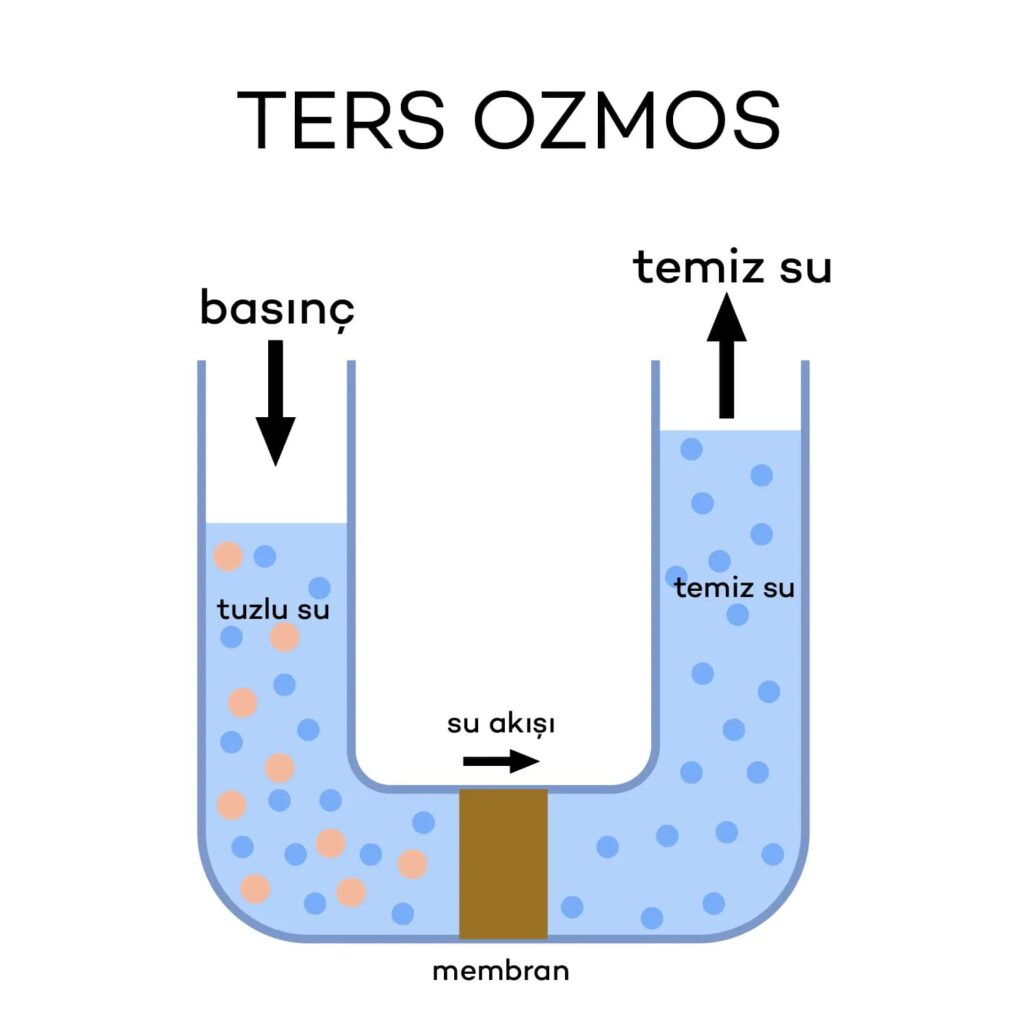
Reverse osmosis is a physical separation process that uses a semi-permeable polymeric membrane (membrane) and high pressure to remove dissolved solids (TDS), ions, bacteria and chemicals from water. It is the exact reverse of the natural process of osmosis, which occurs spontaneously and requires no energy, achieved by applying external mechanical pressure (usually via water pumps). As a result, the water on the contaminated and concentrated side is forced through the membrane’s fine pores into the purified water line, whilst the contaminants are left behind and directed into the drain line.
The Key Differences Between Natural Osmosis and Reverse Osmosis
Natural osmosis, which we observe everywhere in nature, from cell biology to the absorption of water by plants from the soil, is a spontaneous flow from a less concentrated solution to a more concentrated one. In reverse osmosis, however, the aim is not to achieve equilibrium but to completely separate the solvent (water). For this reason, an external pressure source or motor pressure strong enough to overcome the natural osmotic pressure is required.
| Comparison Criterion | Natural Osmosis | Reverse Osmosis |
| Flow Direction | From a low-density environment to a high-density environment. | From a highly concentrated (contaminated) environment to a less concentrated (pure) environment. |
| Energy/Pressure Requirements | It does not exist; it develops spontaneously due to natural osmotic pressure. | It is high. An external mechanical pump or mains pressure is required. |
| Semi-permeable membrane | Cell membrane or plant root membrane. | TFC (Thin Film Composite) polyamide synthetic RO membrane. |
| Main Objective | To maintain intracellular fluid balance and the life cycle. | To produce drinking water, industrial-grade pure water and medical-grade deionised water. |
Reverse Osmosis Membrane Technology and Pore Structure (0.0001 microns)
The RO membranes, which form the heart of the system, possess an incredible level of microscopic precision. When one considers that a human hair is approximately 70 microns thick and a bacterium averages 1 micron in size, the 0.0001-micron (0.1-nanometre) pore diameter of the reverse osmosis membrane clearly demonstrates the power of this technology. This technology is so effective that its capacity to remove heavy metals, viruses and dissolved solids from water at a rate of 95–99 per cent has been laboratory-tested and verified by NSF International, an independent authority, in accordance with their standards. The most widely used type of membrane today is the Thin Film Composite (TFC) polyamide membrane, known for its high salt rejection performance and long service life.
How Does a Reverse Osmosis Water Purifier Work? (5-Stage Cascade Filtration)
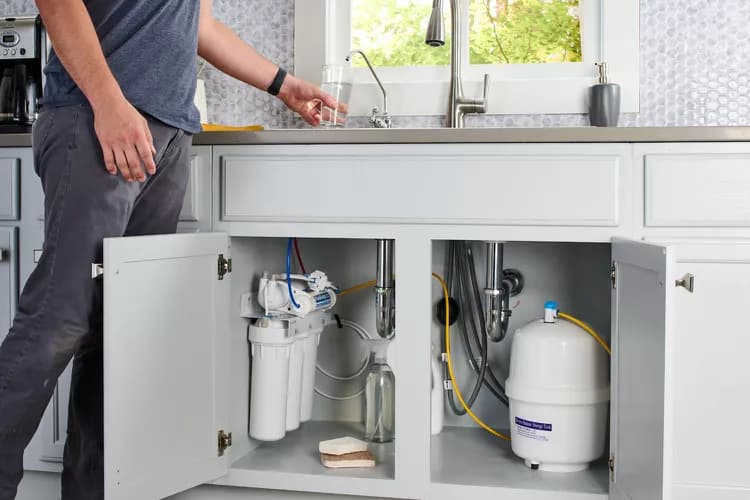
Reverse osmosis is not simply a single filter; it is a cascade (multi-stage) engineering marvel in which each stage supports and protects the others. From the moment mains water enters your system, it must pass through specific stages until it achieves molecular purity.
Stages 1, 2 and 3: Pre-filtration (Sediment, GAC and Block Carbon)
No matter how robust the membrane technology may be, it is rapidly damaged when it comes into direct contact with coarse sediment, rust and, most importantly, chlorine present in tap water. For this reason, in the first three stages of the system, the water is passed through a 5-micron spun-bonded sediment filter to remove sludge and coarse particles; it is then directed to Granular Activated Carbon (GAC) and Block Carbon (CTO) filters. The carbon filters absorb chlorine, unpleasant odours and organic chemicals from the water, thereby preventing chemical damage to the RO membrane and forming the most important protective barrier in the water filtration system.
Stage 4: High-Pressure RO Membrane and the Cross-Flow Principle
The dechlorinated water emerging from the pre-treatment stage is fed into the main RO membrane housing at a pressure of between 3.5 and 6 bar on average. Reverse osmosis membranes do not trap water inside them like traditional filters; they operate on the ‘Cross-Flow’ principle. Water flows tangentially across the membrane surface; whilst part of this flow passes through the membrane under pressure to form pure water (permeate), contaminants such as heavy metals, nitrates, mercury and arsenic—which cannot pass through the membrane—are flushed out into the waste stream (concentrate) along with the continuously flowing water. This self-cleaning mechanism ensures that the membrane can operate for years without becoming blocked.
Stage 5: Remineralisation and Post-Carbon Sweetening Filtration
The water emerging from the main membrane is in a demineralised state close to laboratory purity; at this stage, the pH level is low and the taste is harsh. To make the water as suitable as possible for human physiology, the fifth stage—remineralisation and post-carbon flavour-enhancing filters—comes into play. Whilst the coconut shell-based post-carbon filter perfects the water’s drinking flavour, the bioceramic mineral filters add calcium and magnesium ions to the water, ensuring it reaches pH levels of 7.5–8.5 in accordance with alkaline water purification system standards.
| Filtration Stage | Filter Type and Pore Size | Pollutants It Traps and Its Main Function | Average Lifespan |
| Stage 1 | Sediment (Spun) / 5 microns | Sand, mud, rust and plumbing deposits. | 6–8 months |
| Stage 2 | Granular Activated Carbon (GAC) | Chlorine, chloramine, and organic compounds that cause colour and odour. | 6–8 months |
| Stage 3 | CTO Block Carbon / 1 micron | Fine particles and residual chlorine (membrane protection). | 6–8 months |
| Stage 4 | RO Membrane / 0.0001 microns | Heavy metals, viruses, bacteria, limescale, microplastics, PFAS. | 18–24 months |
| Stage 5 | Post-Carbon and Mineral | pH adjustment, magnesium/calcium fortification and flavouring. | 12 months |
Is Reverse Osmosis Water Healthy? Mineral Loss and Safety Analysis
One of the topics frequently debated in society and subject to misinformation is the effect of water produced by reverse osmosis systems on human health. It is true that this technology reduces the levels of beneficial minerals to some extent whilst purifying the water, but this does not mean that the water is ‘harmful’. Modern systems are specifically designed to overcome this drawback.
The Debate on Demineralised Water: Is Retaining Minerals Harmful?
Scientific research shows that the human body obtains more than 95 per cent of its daily requirement of calcium, magnesium and potassium from food (vegetables, dairy products, meat and pulses). The inorganic structure of minerals in water is absorbed by the body only to a very limited extent. According to World Health Organisation (WHO) reports, remineralisation (mineral supplementation) stages have been incorporated into modern water treatment systems to prevent the adverse effects of the regular consumption of demineralised water; thereby ensuring that the water is not only purified of harmful metals but also that the necessary balance of calcium and magnesium is restored.
Ideal Water Quality Criteria: TDS, pH and Conductivity Values at the Membrane Outlet
Whether a reverse osmosis system is operating efficiently can be determined not only through laboratory tests but also through simple TDS (Total Dissolved Solids) and pH measurements that can be carried out at home. The average TDS value of tap water in Turkey ranges between 250 and 500 ppm.
| Water Stage | Ideal TDS (ppm) | Ideal pH Level | Pressure Requirement |
| Raw Tap Water | 200–500 ppm | 7.0 – 7.5 | Minimum 3.5–4 bar |
| RO Membrane Outlet | 10–25 ppm | 6.0 – 6.8 | High (Motorised) |
| After the Mineral Filter | 50–150 ppm | 7.5 – 8.5 | Normal Tap Pressure |
What are the advantages and disadvantages of reverse osmosis systems?
Like any technological system, reverse osmosis offers users unique benefits, but there are also engineering requirements that must be taken into account. It is vital to properly weigh up the pros and cons before installing this technology in your home or business.
The Benefits of Reverse Osmosis: Protection Against Heavy Metals, Chlorine and Microplastics
The system’s greatest advantage is that it provides absolute protection against insidious hazards that could contaminate tap water. Lead leaching from old water pipes, nitrates entering the water from agricultural pesticides, and ‘forever chemicals’ (PFAS) – the biggest global crisis of recent years – can only be filtered out at a domestic level using this technology. According to reports by the US Environmental Protection Agency (EPA), reverse osmosis is the most effective standard method used to remove microplastics and chlorine by-products from drinking water. Furthermore, as it completely removes limescale from the water, it definitively prevents limescale build-up in kettles and kitchen appliances, bringing out the true flavour of tea and food.
Disadvantages and Engineering Solutions: Wastewater Ratio and Water Conservation
The most criticised aspect of traditional RO systems is the production of waste water (concentrate), which is a consequence of the cross-flow principle. In older-generation units, up to 3 litres of water could be discharged to produce 1 litre of purified water. However, modern engineering has provided environmentally friendly solutions to this problem; thanks to new-generation recovery membranes and waste-limiting (flow restrictor) valves, the waste water ratio has been reduced to a 1:1 level, and the waste water line is channelled to garden irrigation or reservoir systems, aiming for zero water wastage.
| Potential Disadvantage | What Causes It? | A Modern Engineering Solution |
| Wastewater Generation | The need for the membrane to self-clean in cross-flow systems. | 1:1 eco-valves and double-diaphragm recovery systems. |
| Low Production Rate | The pores are extremely small (0.0001 microns). | 2–3-gallon pressurised storage tanks integrated into the system. |
| Mineral Deficiency | The inability of the dice to distinguish between beneficial and harmful ions. | Bioceramic alkaline and mineral filters added to the final stage. |
| Low Pressure | The mains pressure is below 3 bar. | Integration of a 24V silent booster pump (RO motor). |
Applications of Domestic and Industrial Reverse Osmosis Systems
Reverse osmosis technology is highly scalable. It operates according to the same physical principles, ranging from a compact unit that fits under your kitchen cupboard to massive plants capable of meeting the water needs of an entire city.
Domestic Under-sink and Pump-driven Water Treatment Solutions
Inline filter units with enclosed casings, developed for domestic use, stand out for their stylish designs and space-saving construction. The enclosed casing design prevents the filters from coming into contact with the external environment, thereby preventing dust build-up and ensuring a more hygienic experience. In flats or upper-floor flats where mains water pressure is low, the electric motorised (pumped) versions of under-sink water purification units should always be chosen to prevent wastage of treated water and to maintain membrane efficiency. Temperature is also a factor affecting performance; during the winter months, when mains water cools, the water’s viscosity increases, so the water purification rate may slow down slightly compared to the summer months.
Industrial Desalination: Applications in the Food and Energy Sectors
From the Industrial Revolution to the present day, purity has been a critical requirement on production lines. The pharmaceutical industry meets its demand for deionised water, whilst power stations meet their demand for boiler feed water—to prevent limescale build-up in turbines—using industrial reverse osmosis modules. Furthermore, this technology plays a leading role in seawater desalination processes as a response to the global freshwater crisis. According to data from the International Desalination Association ( IDA ), over 135 million cubic metres of desalinated drinking water is produced daily using this method at tens of thousands of plants worldwide.
Points to Bear in Mind When Choosing and Using a Reverse Osmosis Water Purifier
When choosing a water purification system that suits your budget and is good for your health, you should focus not only on the external design but also on the quality of the internal components and their certifications.
NSF/ANSI 58 Certification and the Importance of Membrane Quality
There are many unbranded filters on the market that are produced in unregulated workshops. The surest way to determine whether a device is safe for health is to check for international NSF certifications. The NSF/ANSI 58 standard specifically verifies the heavy metal removal capacity and reliability of reverse osmosis systems. Devices featuring well-known, approved TFC membranes, such as DOW Filmtec or Vontron, purify your water to the same high standard as on the very first day, without any loss of performance over many years. Ensuring that all plastic components used comply with the NSF/ANSI 372 standard (lead-free materials) also prevents carcinogenic substances from entering the water from external sources.
Filter Replacement Intervals and Periodic Maintenance Standards
Water purification systems are not devices that you simply install and then forget about; they require regular filter changes, just like the routine servicing of a car. The initial three-stage set, comprising sediment, GAC and block carbon filters, should be replaced every 6 to 12 months on average, depending on usage intensity and the level of contamination in the mains water. The membrane’s lifespan, however, ranges from 18 to 24 months, depending on how well the pre-filters are maintained. It is vital for the long-term sustainability of the water quality provided by the system that you do not neglect maintenance procedures and that you carry out filter replacement using original spare parts. By taking regular measurements with a TDS meter, you can easily determine whether your membrane has reached its saturation point.
Frequently Asked Questions About Reverse Osmosis
What is the process of reverse osmosis?
Reverse osmosis is the principle of applying external mechanical pressure (from a pump or mains supply) against natural osmotic pressure to facilitate the passage of solvent molecules (water) from a highly concentrated solution to a less concentrated one. In water treatment, this process involves the separation of pure water molecules by blocking 95–99 per cent of arsenic, lead, mercury, nitrates, bacteria and total dissolved solids (TDS) in tap water via semi-permeable polymeric membranes.
Is reverse osmosis water treatment healthy? (Are there any risks?)
Yes, it is the healthiest and safest method of obtaining water available today. Reverse osmosis is the most reliable filtration system for removing insidious heavy metals, microplastics, chlorine by-products and limescale. As high-precision filtration also removes beneficial minerals from the water, modern water treatment systems use NSF-certified specialised remineralisation (mineral supplementation) and alkaline filters as standard. In this way, the water’s pH level is raised to the 7.5–8.5 range, bringing the calcium and magnesium balance to an ideal level; not only is the water harmless, but it also becomes beneficial for supporting the immune system.
How does reverse osmosis work? (Domestic and industrial applications)
Reverse osmosis is not a manual process or a simple chemical mixing process, but a sequential, multi-stage engineering system operating at high pressure. The process begins, in sequence, by passing the water through 5-micron sediment and activated carbon pre-filters using mains pressure or an external pump (minimum 3–4 bar) to remove chlorine and suspended solids. The water is then forced under high pressure through a 0.0001-micron TFC membrane housing. At this stage, the pure water passing through the membrane is directed into the clean water storage tank, whilst the harmful components that cannot pass through the membrane are discharged via the concentrate waste water drain restrictor. In the final stage, the water from the tank is passed through a flavour enhancer and a mineral filter before being delivered to the tap.
What should the reverse osmosis parameters be? (TDS, pH, pressure)
Under laboratory standards and for healthy consumption, the TDS (Total Dissolved Solids) value of the purified water at the membrane outlet should be within the range of 10–30 ppm. The ideal TDS value for drinking water following mineral and post-carbon flavouring filters should be balanced within the range of 50–150 ppm to meet the body’s needs. The pH value of water fresh from the membrane may drop to a level of 6.0–6.8 (slightly acidic); however, after mineralisation, it should be within the 7.2–8.5 pH range at the final consumption stage. To achieve maximum efficiency from the system and minimise the volume of waste water, the water pressure entering the unit should be within the range of 3.5–6 bar (50–85 PSI); in low-pressure systems with a pressure below 3 bar, pump-equipped units must be used.
 Copy Blog Link

























