TR
 4 August 2026

The quality of the water we consume and use in our daily lives is of great importance, both for our physical health and for the lifespan of our household appliances. It is a scientific fact that between 50 per cent and 70 per cent of a healthy adult’s body weight consists of water; for this reason, the quality of the water we drink directly affects our physiology and organ functions (Source: İSTAHED). However, it is often impossible to tell simply by looking at tap water whether it contains heavy metals or is excessively hard. It is precisely at this point that the question of ‘how is water hardness measured?’ becomes the most fundamental issue that everyone – those wishing to improve the quality of the water in their home, those who care about their family’s health, and those wishing to protect their household goods – must address.
Hard water, commonly referred to as ‘hard water’ in everyday language, not only spoils the taste of your tea or meals; it also builds up inside the internal components of white goods such as washing machines, dishwashers and boilers, leading to faults that are quite costly to repair. In this comprehensive guide, we’ll walk you through, step by step, how to determine the limescale content of your water using entirely practical methods at home. Whether you wish to optimise the water settings on your professional coffee machine or are looking for the safest drinking water for your family, you’ll learn all the measurement methods in detail – from test strips to liquid titration drop kits – without needing to visit a laboratory.
What is Water Hardness?
When assessed from a hydrological and chemical perspective, water hardness refers to the total amount of minerals present in the water in dissolved form. Among these minerals, calcium (Ca²⁺) and magnesium (Mg²⁺) ions in particular are the key factors determining whether water is hard or soft. Rainwater is actually completely soft and contains no minerals when it first falls from the clouds to the earth’s surface; however, as it seeps towards underground water sources, it dissolves and absorbs many minerals—primarily calcium carbonate (CaCO₃)—from the soil and rock it passes through.
The higher the concentration (density) of these calcium and magnesium minerals in water, the ‘harder’ the water becomes, and it reaches our homes in the form of hard water. According to guidelines from the World Health Organisation (WHO), one of the global authorities on drinking water quality, the maximum limit for total hardness in drinking water is set at 500 mg/L, expressed as calcium carbonate (Source: WHO). Water exceeding this critical limit begins to pose serious risks for both human consumption and domestic use, ranging from difficulties with cellular absorption to blocked pipework.
The Difference Between Temporary and Permanent Hardness
When determining the calcium content and hardness of water, it is crucial to understand the nature of this hardness within two distinct sub-categories in order to find a solution: temporary hardness and permanent hardness. Temporary hardness (carbonate hardness) arises from the high concentration of calcium bicarbonate and magnesium bicarbonate compounds in the water. As the name suggests, this condition is temporary; by boiling the water at high temperatures, these minerals can be converted into carbon dioxide gas, which is released from the water, and the calcium carbonate can be precipitated as limescale. That stubborn, hard white limescale layer we see at the bottom of kettles or water heaters is precisely the visible result of this chemical precipitation process.
Permanent hardness (non-carbonate hardness), on the other hand, arises from the presence of other strong mineral salts in the water, such as sulphates, nitrates and chlorides. Unlike temporary hardness, simply boiling the water does not break these bonds or separate the minerals; consequently, standard heating is of no use in removing permanent hardness. The ‘Total Hardness’ level of tap water refers to the sum of temporary and permanent hardness. To find permanent and definitive solutions to the hard water flowing from your tap, it is essential to measure the total hardness value using the correct test kits beforehand and to treat it using professional filtration systems.
How to Measure Water Hardness at Home? (Step-by-Step Methods)
If you have concerns about the limescale content and overall quality of the tap water supplied to your home, there are scientific testing methods you can easily carry out yourself before paying high fees for a laboratory analysis. Testing your water quality in your own kitchen helps you make the right decision, particularly when choosing a water treatment system to install in your home; after all, if your water is very hard, the technology of the filter membrane you need will vary accordingly. Below, you can find a step-by-step guide to three different methods for measuring water hardness, all of which are readily available on the market and are the most commonly used.
1. Using Water Hardness Test Strips
One of the cheapest, most practical and quickest methods available today for measuring water hardness is to use water hardness test strips. Resembling the litmus paper we remember from school chemistry lessons, these single-use strips react by changing colour the moment they come into contact with water, thanks to special chemical reagents impregnated into their tips. Many world-renowned manufacturers of washing machines, dishwashers and fully automatic coffee machines ensure that a single such strip is included inside the product packaging to enable you to calibrate the appliance’s water inlet correctly during initial set-up.
Using the test strip is a very simple process that requires no technical knowledge. First, fill a clean glass with cold water straight from the tap; then dip the test strip into the water so that it is completely submerged and wait for about two to three seconds. After removing the strip from the water, gently shake off any excess droplets and leave it at room temperature for about a minute to allow the chemical reaction to complete. The active squares on the strip will change colour from green to red or purple depending on the water’s hardness level. By holding the strip up against the colour scale provided on the product packaging or in the user manual, you can determine within seconds whether your water is soft, moderately hard or very hard.
2. Liquid Test Kit (Titration Drop Test)
Whilst test strips may give you a quick idea of the general condition of the water, if you need a precise and clear numerical value for the settings you will enter into your equipment, the most sensible approach is to use a liquid test kit – known scientifically as a titration test. These drop-count kits are reliable measurement tools with a margin of error close to zero, typically favoured by professional technicians installing water treatment systems, chemists and hobbyists seeking to maintain the mineral balance of their aquarium water. When using a titration kit for the first time, following the instructions provided in the box to the letter will ensure you carry out the measurement correctly.
To carry out the liquid test at home, first fill the small, transparent plastic test tube provided in the kit with tap water up to the marked millilitre line (this amount is usually 5 ml). Next, holding the bottle containing the reactive chemical solution upright, start adding drops one by one into the tube. With the first few drops, the water will take on a pinkish or reddish hue; as you add each new drop, swirl the tube gently in a circular motion and observe the colour. As you continue to add drops, the colour of the water will suddenly change from red to a distinct shade of blue or green. You must count how many drops of liquid you have added to the test tube until the water turns completely blue; this is because each drop you use will give you a numerical value for the French or German hardness of your water.
3. Reviewing Local Water Authority Reports
If you do not wish to buy any test strips or liquid test kits to test the water in your home yourself, the most reliable alternative is to consult the monthly water quality reports published by your local water and sewerage authority (e.g. İSKİ, ASKİ, İZSU, etc.). To protect public health and uphold the principle of transparency, these official bodies regularly publish detailed laboratory analysis results each month on their corporate websites in tabular form, broken down by district, neighbourhood and main water mains, making them accessible to the public.
Due to Turkey’s geographical structure, its groundwater resources are rich in minerals. Indeed, according to independent regional hydrological studies carried out by universities, a significant proportion of the mains and groundwater in our country has a hardness level measured between 186 mg/L and 586 mg/L, which, by global standards, classifies our water as ‘hard’ and ‘very hard’ (Source: Dergipark). By finding the monthly report for your province and district and checking the ‘Total Hardness’ column in the table, you can quickly find out the average limescale content and mineral levels of the water flowing from your tap, free of charge.
Units of Water Hardness: French and German Hardness Scales
Countries in different parts of the world have developed their own metric systems to standardise, express and use water hardness and mineral content in international trade. It is vital to understand exactly what these units mean so that you can interpret the test results obtained at home correctly, select the right technical specifications when purchasing a water treatment system, and enter the correct values for your household appliances. In our country, the two main metrics most commonly encountered, both by consumers and in industry, are the French and German hardness scales.
What is the French Hardness Scale (Fr)?
In Turkey’s water treatment sector, laboratory chemistry and analysis reports published by local authorities, the most commonly used standard unit is the French Hardness Degree. In texts, it is generally denoted by the abbreviation °fH or simply by the symbol Fr. To put it in technical terms, 1 French Hardness Degree is equivalent to exactly 10 milligrams of calcium carbonate (CaCO₃) dissolved in 1 litre of water, and calculations are based on this unit.
The ideal range for drinking water, in terms of human health and taste, is between 7 and 14 °fH; this is the range most frequently recommended by experts for its smoothness, pH balance and flavour profile. You may refer to the classification table below, which we have prepared to help you accurately assess the quality of your water and categorise your test results:
| Hardness Class | French Degree (°fH) | Equivalent to mg/L (ppm CaCO₃) |
| Soft Water | 0–7 | 0–70 |
| Medium-Hard Water | 7–14 | 70–140 |
| Hard Water | 14–32 | 140–320 |
| Very Hard Water | 32 and over | 320 and above |
What is the German Hardness Scale (dH)?
The German Hardness Scale (°dH) frequently appears as an international engineering standard in the user manuals of white goods, dishwashers and fully automatic espresso machines, particularly those of European origin. In chemical terms, 1 German degree corresponds to 10 milligrams of calcium oxide (CaO) per litre of water. The German system is regarded as a highly accurate reference system for measuring the direct scale-forming components in water and for predicting machine faults.
When you need to adjust the water hardness setting on the digital menu of your electronic appliances, you will inevitably need to convert the French hardness scale results you have to the German scale. Using a rough and practical calculation, 1 German Hardness Degree is approximately equal to 1.78 French Hardness Degrees. The table below will help clear up any confusion, particularly when carrying out initial calibration for advanced devices manufactured abroad, and will make your task considerably easier:
| German Hardness (°dH) | French Degree (°fH) Conversion |
| 1 °dH | 1.78 °fH |
| 5 °dH | 8.90 °fH |
| 10 °dH | 17.8 °fH |
| 15 °dH | 26.7 °fH |
| 21 °dH | 37.4 °fH |
Can Water Hardness Be Measured with a TDS Meter? (Common Misconceptions)
Pen-shaped TDS (Total Dissolved Solids) meters, which are sold at very affordable prices on e-commerce sites and digital marketplaces, are unfortunately often misunderstood by consumers and purchased as if they were simply ‘limescale testers’. However, this common misconception is one of the biggest technical errors made by the general public when measuring water quality. TDS meters do not actually measure the limescale content of the water; rather, they measure its overall electrical conductivity and display the concentration of all dissolved substances in the water in milligrams per litre (ppm) on the screen.
These digital devices measure the total dissolved solids (TDS) in your water by combining, in a single reading, calcium and magnesium—which contribute to water hardness—along with sodium, potassium, chloride, sulphate and all other conductive minerals that may be present in the water, without distinguishing between them. Therefore, if you measure your tap water and see a very high reading on the TDS meter’s display, this does not necessarily mean that your water is very hard; even if your water is soft, it may simply be very rich in other beneficial minerals (such as potassium or magnesium). To determine the pure calcium carbonate content, it is the calcium carbonate reaction that must be measured specifically, rather than general conductivity; therefore, the most accurate and precise results for calcium carbonate detection are always obtained through titration (drop) tests, not via TDS.
Why Is Water Hardness Important for Coffee Machines and Appliances?
The trouble-free service life of all your water-powered appliances in your kitchen is directly linked to the limescale and hardness levels of the water you use. According to engineering data shared by Miele, one of the leading brands in the white goods and built-in appliance market, when tap water exceeds 21 °dH, permanent limescale damage begins to form on the water heater heating elements within seconds (Source: Miele). A heating element that has become insulated by limescale requires much more effort and energy to reach the target temperature and heat the water; this not only causes the appliance to break down but also leads to a hidden increase in your electricity bills every month.
When it comes to luxury, fully automatic espresso machines, however, the issue is not just about the machine’s motor health; the quality of the coffee in your cup is also at serious risk. It is essential never to forget that an exquisite cup of coffee brewed to standard consists of approximately 98 per cent water. Using excessively hard water masks the fruity and sweet acidity found in high-quality coffee beans, trapping all the aromas; as a result, you are left with a bland, bitter and flat-tasting coffee.
Furthermore, when you purchase a high-end espresso machine from a global brand such as Nespresso, Philips or Siemens and set it up in your kitchen for the first time, the manufacturer strongly advises that you measure the water using the test strip provided in the box and digitally programme the current limescale level into the machine’s control unit. If you skip this step, ignore it or enter the values incorrectly, the machine’s automatic descaling timer will function completely incorrectly. As a result, your machine will either constantly display unnecessary warnings, forcing you to buy descaling solution, or it will fail to alert you even when it is completely clogged with limescale, causing the motor to burn out and rendering it ineligible for warranty cover.
How Can Hard Water Be Softened and Removed?
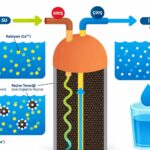
You have successfully tested the tap water in your home using a test strip or liquid test kit and found that the limescale level is much higher than you expected. So, what should you do to find a permanent solution to this frustrating situation? As you have absolutely no way of intervening at the source of the mains water supply, you must install a technological solution either at the main valve where the water enters your home or at the point of use (for example, under your kitchen worktop). The most modern, scientific and permanent method of removing limescale from hard water is to install professional systems that use ion-exchange resins and high-pressure reverse osmosis (RO) membranes.
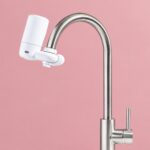
These advanced water treatment systems, which utilise cutting-edge technology, not only pass water through microscopic pores measuring one millionth of a millimetre, but also fundamentally soften the water by replacing the calcium and magnesium ions that cause limescale with harmless sodium ions, using the ion-exchange method. Designed specifically to meet this consumer need, these stylish, new-generation water dispensers with built-in filtration not only protect your household appliances from the damaging effects of limescale but also, thanks to their filtration stages, ensure you enjoy water with an ideal pH balance, enriched with minerals, and a pleasant, alkaline taste.
Whilst water softening systems installed behind the meter at the entrance to your flat may be preferred to protect your home’s general plumbing, central heating boiler and washing machine, under-sink reverse osmosis units in the kitchen will be more than adequate for the sole purpose of obtaining clean drinking water, making tea and cooking. For a healthier lifestyle for your whole family and sustainable, cost-effective use of appliances, consuming fresh water with all limescale removed and an optimised mineral balance is one of the most sensible long-term steps you can take for both your budget and your health.
Frequently Asked Questions
How can you tell if the water is hard?
There are a few obvious physical signs in everyday life that allow you to tell whether your tap water is hard, even without using any testing equipment. The most important and common sign is that the soap and shampoo you use in the bath take a long time to lather, or that you have to use far more detergent than usual to get a sufficient lather; because the calcium minerals in the water react instantly with the soap molecules, turning into insoluble white deposits. Furthermore, clothes and towels washed in the washing machine becoming felted and stiff after drying, a slippery or gritty sensation remaining on the skin as if it hasn’t been properly cleaned after washing your hands with soap, and stubborn white limescale stains that dry and leave marks on kitchen sinks, taps and on bathroom shower screen glass, are the clearest natural indicators that the water in your home is hard.
What should the normal water hardness be?
In accordance with the TSE 266 guidelines, which are set by the state authorities to determine drinking water standards, and the World Health Organisation guidelines, which set international health standards, the maximum hardness of potable water supplied via the mains network, expressed as CaCO₃, is accepted as a tolerable upper limit of 500 mg/L from a public health perspective. However, experts strongly recommend that the water be maintained at precisely between 7 and 14 French degrees of hardness to ensure an ideal taste for human consumption, the use of domestic appliances and beverages such as tea and coffee. This ideal range corresponds to a calcium carbonate value of approximately 70–140 mg/L, keeping the water truly ‘medium-hard’, with a smooth taste that is gentle on the stomach and in its healthiest form.
How can you find out the water hardness?
The hardness of water can be accurately determined in three main ways for domestic users and industrial facilities. Firstly, you can purchase a water hardness test strip from an online retailer or a DIY store, dip it into tap water for a few seconds and compare the resulting colour change with the scale on the packaging. Secondly, you can use a much more accurate water hardness measurement kit (titration) by adding a few drops of a special liquid reagent to the water in a test tube and counting how many drops are used until the colour of the water changes, thereby obtaining a precise scientific result. The third and most cost-effective method is to download and examine the street- and neighbourhood-specific laboratory water quality analysis reports published regularly each month on the official websites of your local council and water authorities.
How is water hardness calculated?
If the concentrations of calcium and magnesium ions in tap water, expressed in mg/L (ppm), are already known from laboratory analysis, these values are calculated mathematically using the following international formula: Total Hardness (mg CaCO₃/L) = 2.497 × [Calcium Concentration] + 4.118 × [Magnesium Concentration]. If you do not wish to deal with such chemical formulae and laboratory terminology, and are using a domestic drop-count (titration) test, the calculation is much simpler. For every drop added to the test tube that changes the colour of the water (which varies depending on the kit’s manufacturing standard), the result is usually multiplied by 10 or the number of drops is read directly to immediately obtain the French Hardness Degree (°fH) or German Hardness (°dH).
 Copy Blog Link